
Reference - Encyclopedias, Dictionaries & Thesauri, Reference - Encyclopedias, Nature & the Natural World - General & Miscellaneous
Log in to track your reading progress.
Overview
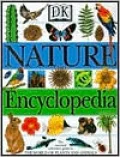
From the smallest single-celled organisms to the greatest mammals of land and sea The DK Nature Encyclopedia describes in outstanding detail the rich diversity of life on Earth. Magnificently illustrated, and featuring dramatic time-lapse photographs, this compelling guide gives a fascinating insight into how living things evolve, feed, reproduce, and defend themselves - Explores each major plant and animal group, including flowering plants, birds, reptiles, insects, fish, and mammals -Thematic sections cover topics as varied as reproduction and survival, photosynthesis and communication - Also includes classification charts and a glossary of science terms.Covers the processes and life forms of the natural world from A to Z.
Editorials
Children's Literature -
The processes and life forms of the natural world are the focus of this extensive reference book. It opens with a look at the natural world and a discussion of how life began. Evolution, the next section, addresses how living things work, including feeding, reproduction, movement, and communication. Then there is a section on ecology that looks at biomes. The complicated classification system is made simple and certain plants and animals are examined in greater detail. The closing reference section makes it clear that the classification system used in this book is not the only one and that, as new discoveries are made, details of classification change. For elementary level science programs and home libraries, this book will prove its worth. High quality full-color illustrations will encourage even casual users to spend time turning the pages in this book.School Library Journal
Gr 5-8--This beautifully illustrated volume will be a welcome addition to most reference collections. In each two-page spread, a brief paragraph introduces a particular topic, while several short blocks of text and illustrations provide more detail. The spreads are appealing, with an eclectic mix of finely detailed color drawings, color photographs, anatomical diagrams, and maps. All of the illustrations are labeled and most species shown are identified by both common and scientific names. The book is divided into six sections. "The Natural World" describes the origins and evolution of life on Earth. "How Living Things Work" examines the basic characteristics shared by all living things--respiration, reproduction, life cycles, etc. "Ecology" surveys the major types of habitats around the world and discusses topics such as food chains and endangered species. A short section explains "How Living Things Are Classified," while the final chapters look at specific groups of plants (e.g., "Grasses and Sedges," "Parasitic and Epiphytic Plants"), and animals (e.g., "Starfish and Sea Urchins," "Birds of Prey," "Cats"). Profile boxes offer facts about and a small photo of a particular species. An appendix includes classification charts, a useful glossary, and a detailed index. Well organized, clearly written, and with an amazing scope, this encyclopedia makes a valuable guide to nature.--Karey Wehner, San Francisco Public LibraryBook Details
Published
August 1, 1998
Publisher
DK Publishing (Dorling Kindersley)
Pages
304
Format
Hardcover
ISBN
9780789434111