
Central American History, Children - Social Studies, Latin American & the Caribbean - History
Available on Bookshop
Write a review
Books.org participates in affiliate programs including Bookshop.org and the Amazon Services LLC Associates Program. We may earn a commission from qualifying purchases made through links on this page, at no additional cost to you.
Log in to track your reading progress.
Editorials
Children's Literature -
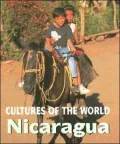
Nicaragua is the largest nation in Central America. Imagine a nation approximately the size of the state of New York. Then conjure up an image of a landscape covered in mountain ranges, volcanoes, tropical forests, and long spans of oceanic coastline. In this mental image you have a fairly accurate picture of what much of Nicaragua looks like. In Nicaragua, readers are provided a fairly in-depth look at this nation, its people, and the geography of the land. Also offered are lessons in Nicaragua's sometimes bloody history and, in particular, the political upheaval that led to civil war in the 1980s. Sadly, as the authors of this cogently written book note, the United States played an unfortunate role in that bloody set of years as efforts to oppose communism blinded foreign policy and led to greater human suffering. Yet, it is the unbiased and evenhanded way in which the authors of this text tackle such painful incidents that marks this as a work of value. Nicaragua is part of a broader illustrated series titled "Cultures of the World." This book serves a valuable purpose as a lesson in the way of life that marks this Central American nation and its people.School Library Journal
Gr 6-10Three books that provide much-needed, timely information on all aspects of life today in their respective countries. A pleasing series layout draws readers into the texts through well-placed, excellent-quality, full-color photographs and reproductions. The language is challenging, yet the information is interesting and clearly presented. Organized by topics such as geography, lifestyle, government, language, arts, and festivals, a great deal of material is supplied both for report writers and for general readers. In Haiti, students will learn about the background of the people, their recent political turmoil, and anticipation of Aristide's return to power. Especially interesting here is the discussion of the various ethnic and language influences, as well as the important role of voodoo. The ingenuity and creativity of the Haitian people as a positive factor in this struggling country are rightfully credited. El Salvador traces the history of the Spanish Conquest and the influences of Indian languages and liberation theology on the people. The political role of the United States in recent history should prove helpful to anyone trying to understand the country's recent and devastating struggle against abuse and injustice. Here, too, the arts, especially poetry, play a major role in everyday life. Finally, Nicaragua presents an engaging look at the Nicas, as the people are called. All three of these well-done volumes conclude with maps, a quick-notes section, a brief bibliography, and a substantial index.Nancy E. Zuwiyya, Binghamton High School, NYBook Details
Published
September 1, 2005
Publisher
Cavendish, Marshall Corporation
Pages
144
Format
Library Binding
ISBN
9780761419693