
Motherhood, Women & Employment - General & Miscellaneous, Careers & Employment - Life - Aspects, Phases & Styles
Log in to track your reading progress.
Overview
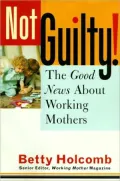
Can women have rewarding careers an still be good mothers? Do children benefit from Mom's career? What about Dad? In this provocative new book, a distinguished journalist and editor at "Working Mother" magazine answers with a resounding yes! and tells readers why.Editorials
Publishers Weekly -
About the only good news that Holcomb, a consulting editor at Working Mother magazine, has to offer here is that children are not harmed when their mothers work outside the home, according to her extensive research. She contends, however, that a combination of rigid employer policies, lack of affordable quality day care and the persistent cultural myth that children are better off when raised by a working father and a stay-at-home mother combine to make mothers who work feel stressed and anxious. Holcomb draws on studies supporting her argument that women profit emotionally as well as economically from working outside the home, and their children benefit socially from good day care. The author traces a backlash against working mothers that was launched in the 1980s by groups such as Focus on the Family and the Institute of American Values, which continue to lobby against adequate funding for child care. According to Holcomb's thought-provoking analysis, the conservative media have published many articles based on outdated and unsupported evidence that attack working mothers and heighten their guilt. (July)Kirkus Reviews
A carefully researched report on why working mothers can shed their angst and who is laying the guilt trip on them. Holcomb is a consulting editor at Working Mother magazine (and mother of two). Hers is a thoughtful and informed analysis of the roots of resistance to women in the workplace. Holcomb traces the ups and downs of women's status through Freud, John Bowlby's attachment theory (still a powerful influence, although the original studies were based on children in orphanages), and the recent conflicting reports that children's development suffers/doesn't suffer because their mothers work. The Catch-22 still prevalent in the workplace is clearly stated here. Women are denied promotions and raises because they are mothers and it is assumed by employers that their commitment to the job is weak; if women are fully committed to the job, then itþs assumed their children are suffering. Holcomb takes the media to task for misinterpretingþor not bothering to interpretþstudies of women's conflict about workplace pressures (women were not leaving work and returning home in droves, as one series of reports had it) and of the consequences of day care (itþs not child care per se that adversely affects development, but poor care or problems in the home, such as divorce or financial stress). This ambivalence stymies reasonable discussion for universally funded child care and other parental benefits, like flextime. There are some challenging thoughts about class-driven views of day care (as cachement for the poor or troubled) vs. preschool (grooming the children of the upwardly mobile for Harvard), and about the finances of working mothers. The concluding chapters areoptimistic, foreseeing men and women as equal partners at home and in the workplace, and women more willing to fight for their rights as parents and workers. Solid and astute, with the kind of information that women can use to forge workplace opportunity without guilt.Book Details
Published
July 27, 1998
Publisher
New York : Scribner, c1998.
Pages
384
Format
Hardcover
ISBN
9780684822334