
North American Gardens, Northeastern & Middle Atlantic Region - Gardening
Log in to track your reading progress.
Overview
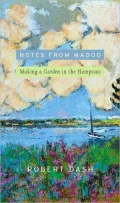
Madoo is an artist's unusual and beautiful garden at the far end of Long Island. Described in the New York Times as "Robert Dash's ever-changing masterpiece," it has been pictured in many books and magazines and visited by lovers of gardens from this country and abroad.Now the author/artist/gardener describes his making of Madoo in a book that is as charming and entertaining as it is enlightening. Dash’s artist's sense --or senses -- of the movement of air and the effects of light and color suffuse all his writings, and show us new ways to look at our own gardens.
As with Henry Mitchell's books, one learns more from reading these essays than from a dozen how-to books. And whether we like to make gardens or simply to look at them, Dash has given us a book to keep by the bedside, where we can read and reread our favorite pieces ("Fairies"? "Manuring"? "The Name of the Rose"? "The Garden Tour"? Too many to list!) over and over again.
Editorials
Quest Magazine
Dash's writing is sensual, a wonder of shapes, sounds, and smells, and often highly comic.Publishers Weekly -
Extracted from the author's gardening columns in the East Hampton Star, these short, exuberant essays tell of 1.98 acres on the far eastern end of Long Island, where Dash has made a garden he calls Madoo, "My Dove" in an old Scots dialect. Dash is a painter, and it shows in every line as he takes readers through a year in a garden characterized by "continuous involvement with the patterns of abstract expressionism." There are descriptions of his favorite plants, bits of garden history, some gardening advice (suited mainly to his area of Long Island) and, in pieces on garden fairies and the tribulations of Adam and Eve in Eden, a few amazing flights of fancy. Opinionated and eccentric, Dash doesn't mince words about his dislikes--the loss of a neighboring field to a housing development, weather forecasters, forsythia ("an absolute ass of a color")--and he freely admits that the hues of his garden's fences would "make indoor eyeballs wince." Dash's lush prose is best taken in small doses, like an over-rich dessert, but he has a gift for evoking what he sees, as when he speaks of wild daisies "making marvelous stops and explosions throughout the garden and in the fields." His observations about the after-colors of winter's withered perennials, the "smell of nameless turnings in the woods" and the taste of a good lettuce, "like dew," should refresh any garden reader. (June) FYI: Since 1994, Madoo has been an independent charitable trust, the Madoo Conservancy. Copyright 2000 Cahners Business Information.|Kirkus Reviews
A painter's meditation on his garden that mixes a bit too much lyricism with some original observations and knowledge of plants. For most of us, coaxing a garden to grow is a humbling experience, but it apparently has the opposite effect on writers. Dash, a well-regarded painter and the author of a gardening column for the East Hampton [N.Y.] Star, presents his idiosyncratic opinions as philosophical or aesthetic profundities and indulges in turns of phrase that aim at haiku but generally achieve only oddity. His contemptuous dismissals of popular plants seem deliberately eccentric: the characterization of forsythia as "an absolute ass of a color, a greeny-yaller braying insult" sounds disingenuous, especially when he adds that "it is so nice" when the withered flowers drop from the bush and coat the ground. He also prides himself on his impatience with time-honored rules of thumb for weather prediction, assuming a tough, no-nonsense tone that imitates classic garden writer Eleanor Perényi. When Dash discusses garden design, however, he is clearly in his element, evoking colors, textures, and forms with the same precision and brilliance that characterize his paintings. Moreover, he is as attentive to practical function as he is to form; the essays on garden paths and benches exhibit common sense as well as keen powers of observation. He is at his best dealing with the least glamorous elements of the garden, providing unsentimental and eloquent accounts of the chores of pruning, manuring, and transplanting. An essay titled "Our Climate" argues by example that plant choice, placement, and planting methods should be determined by the demands oftheparticular locale, rather than by abstract principles. A long piece on the depredations of Hurricane Gloria, mourning the plants destroyed by the storm but affirming the garden's eventual renewal, is garden-writing at its finest. Despite too much mannered, precious prose, this is a collection offering plenty of small pleasures.Book Details
Published
June 20, 2000
Publisher
Houghton Mifflin Harcourt
Pages
266
ISBN
9780547346021