
Join Books.org — it's free

Mapped Categories - Literature, General & Miscellaneous World History, English Language Reference, Fiction Subjects
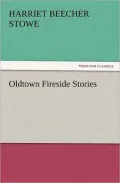
Oldtown Fireside Stories by Harriet Beecher Stowe β€” book cover

Oldtown Fireside Stories

by Harriet Beecher Stowe
Available on Bookshop Write a review

Books.org participates in affiliate programs including Bookshop.org and the Amazon Services LLC Associates Program. We may earn a commission from qualifying purchases made through links on this page, at no additional cost to you.

Log in to track your reading progress.

Overview

This book is part of the TREDITION CLASSICS series. The creators of this series are united by passion for literature and driven by the intention of making all public domain books available in printed format again - worldwide. At tredition we believe that a great book never goes out of style. Several mostly non-profit literature projects provide content to tredition. To support their good work, tredition donates a portion of the proceeds from each sold copy. As a reader of a TREDITION CLASSICS book, you support our mission to save many of the amazing works of world literature from oblivion.

About the Author, Harriet Beecher Stowe

Harriet Beecher Stowe
Harriet Beecher Stowe first published her groundbreaking novel Uncle Tom's Cabin in 1852 as an outcry against slavery after the passage of the Fugitive Slave Act. The book sold more copies than any book other than the Bible and caused Abraham Lincoln to exclaim upon meeting her, during the Civil War, "So you're the little woman who wrote the book that started this great war!"

Biography

Harriet Beecher Stowe was born on June 14, 1811, in Litchfield, Connecticut, to Lyman Beecher, a Calvinist preacher and activist in the antislavery movement, and Roxana Foote, a deeply religious woman who died when Stowe was four years old. Precocious and independent as a child, Stowe enrolled in the seminary run by her eldest sister, Catharine, where she received a traditionally "male" education. At the age of twenty-one, she moved to Cincinnati to join her father who had become the president of Lane Theological Seminary, and in 1936 she married Calvin Ellis Stowe, a professor at the seminary and an ardent critic of slavery. The Stowes supported the Underground Railroad and housed several fugitive slaves in their home. They eventually moved to Brunswick, Maine, where Calvin taught at Bowdoin College.

In 1850 congress passed the Fugitive Slave Law, prohibiting assistance to fugitives. Stowe was moved to present her objections on paper, and in June 1851 the first installment of Uncle Tom's Cabin a appeared in the antislavery journal National Era. The forty-year-old mother of seven children sparked a national debate and, as Abraham Lincoln is said to have noted, a war.

Uncle Tom's Cabin: Or, Life Among the Lowly met with mixed reviews when it appeared in book form in 1852 but soon became an international bestseller. Some critics dismissed it as abolitionist propaganda, while others hailed it as a masterpiece. The great Russian novelist Leo Tolstoy praised Uncle Tom's Cabin as "flowing from love of God and man." Stowe presented her sources to substantiate her claims in A Key to Uncle Tom's Cabin: Presenting the Original Facts and Documents Upon Which It Is Based, published in 1853. Another antislavery novel, Dred: A Tale of the Great Dismal Swamp, appeared in 1856 but was received with neither the notoriety nor the success of Uncle Tom's Cabin.

Stowe fueled another controversy in The True Story of Lady Byron's Life (1869), in which she accused the poet Lord Byron of having an incestuous love affair with his half sister, Lady Byron. She also took up the topic of domestic culture in works that include The New Housekeeper's Manual (1873), written with her sister Catharine. Stowe died on July 1, 1896, at age eighty-five, in Hartford, Connecticut.

Author biography from the Barnes & Noble Classics edition of Uncle Tom's Cabin.

Good To Know

After its publication in 1852, Uncle Tom's Cabin sold more copies than any other book up to that point, with the exception of the Bible.

When it was becoming a sensation around the world, Uncle Tom's Cabin was smuggled into Russia, in Yiddish to evade the czarist censor.

Between 1853 and 1859, Stowe made several trips to Europe, and forged friendships with fellow writers George Eliot and Elizabeth Barrett Browning.

Reviews

There are no reviews yet. Log in to write one.

Book Details

Published
March 22, 2012
Publisher
TREDITION CLASSICS
Pages
108
Format
Paperback
ISBN
9783847239123

More by Harriet Beecher Stowe

Similar books