
Slavery & Abolition - Biography, Regional Biography, United States - Slavery & Abolitionism - History, United States - 19th Century - Pioneers & The Old West, Pioneers - Biography, African American - Biography - General, Women - Biography
Log in to track your reading progress.
Overview
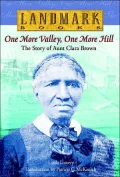
Author Linda Lowery chronicles the extraordinary—but little-known—life of black pioneer Aunt Clara Brown. Aunt Clara bought herself out of slavery, crossed the country on foot to reach the frontier, became a wealthy entrepreneur, aided other freed slaves, and eventually tracked down her lost daughter, sold away from Clara 47 years before. An inspiring piece of history that all Americans should know!
Chronicles the life of the woman called Aunt Clara Brown, who was born into slavery and became a pioneer and entrepreneur, earning money to bring other former slaves to a new start in Colorado.
Editorials
Children's Literature
How many remarkable true stories have we let slide under the carpet of history? Thankfully, there is one less overlooked story now, with this fascinating biography of Aunt Clara Brown. Born into slavery, Clara Brown saw one of her children die in a tragic drowning accident. Then she cried helplessly as she, her husband and children were sold at auction to separate owners. At age fifty-six, Aunt Clara was set free by kindhearted owners. She then set out to try her luck in the Colorado gold rush. Aunt Clara found her fortune not in gold but in dirty clothes. By serving the laundering needs of miners she became one of the wealthiest women in the American West. Through all her trials and successes, though, Aunt Clara never ceased searching for her lost daughter Eliza Jane. Devoutly religious, she was known to drop to her knees at any time or place in order to give thanks to God. Aunt Clara's amazing true-life story resonates through the years, culminating in a joyous reunion with her daughter, when Clara was eighty-two. Short articles interspersed throughout the narrative give interesting background into the Dred Scott case, the Underground Railroad, the Colorado Gold Rush, and much more. 2002, Random House,— Christopher Moning <%ISBN%>0375810927 <%ISBN%>0375910921
KLIATT
This detailed account of the life of a former slave who became a pioneer in the 1850s is a compelling tale of determination. Clara Brown was probably born in 1800 in Virginia. She and her mother were sold three years later; her father and sisters were all sold to different owners and Clara never saw them again. She married in 1818 and had four children, one of whom drowned. Her owner fell on hard times, so her children and husband were sold. Her faith in God saw her through her days as a slave and the trials she faced after she bought her freedom when she was 56. Eventually she became an entrepreneur in Colorado and one of the wealthiest women in the West, but she always sought her lost baby, Eliza Jane. They were reunited when Clara was 83. She and her daughter had two years together; Clara Brown died on October 26, 1885. Lowery writes for grades four and up, but uses the vocabulary of the 1800s, so "nigger" and other epithets are in the text. Unfamiliar terms are defined. (Landmark Books). KLIATT Codes: J—Recommended for junior high school students. 2002, Random House, 222p. illus. bibliog. index., Ages 12 to 15.—Janet Julian
School Library Journal
Gr 6 Up-This book goes beyond a mere listing of dates and occurrences to show readers how Brown touched people and, because of who she was, changed where she lived. She was born into slavery in 1802, married in 1820, and gave birth to Eliza Jane in 1826. Ten years later her daughter was sold to a new owner, and mother and daughter would not be reunited for nearly 50 years. In 1856, Brown bought her freedom and worked her way west. Settling in the mining town of Central City, CO, she established a successful laundry business. Within a few years, shrewd investments and hard work made her a wealthy woman. By 1865, the American Civil War was over and Brown traveled to Kentucky, trying to find Eliza Jane. Failing that, she took 26 ex-slaves back to Colorado with her, doubling the town's population of people of color. She continued to practice charity and philanthropy, winning her many friends in all areas of her life. This book is so much more than the biography of a rare and determined woman. Lowery has not only told Aunt Clara Brown's compelling story; in this book, she has also told part of the American story. A few black-and-white reproductions appear throughout.-Jane Halsall, McHenry Public Library District, IL Copyright 2003 Cahners Business Information.Kirkus Reviews
The story of Aunt Clara Brown deserves to be better known. As Patricia McKissack writes in the introduction, Aunt Clara Brown was "a classic American hero." Born a slave, probably in 1800 in Virginia, Clara was sold with her mother to a farmer named Ambrose Smith. In 1809, the Smith family moved west to Kentucky by covered wagon over the Wilderness Road. Eventually, Clara purchased her freedom, moved to St. Louis, and later to Colorado in the Colorado Gold Rush of 1849. Always she searched for her daughter, Eliza Jane, sold on the auction block, stolen from her life. When the Civil War ended, Clara returned to the South to look for her daughter and, instead, found a new "family" of dispossessed former slaves and settled them in Colorado. At the end of her life, Clara was reunited with Eliza Jane, after 46 years and 5,000 miles of traveling and searching, "a million tears, a lifetime of faith that one day, despite all odds, this very moment would come to pass." This entry in the newly reinvigorated Landmark series is lively, well written, and full of historical detail, an impassioned account of racism faced and transcended. Each chapter is followed by information on such historical events such as the Dred Scott Case, the Underground Railroad, the Missouri Compromise, and the Kansas-Nebraska Act. Readers will come to care about Clara Brown and learn much about the times in which she lived. A fine work for biography fans and a necessity for American history collections. (introduction, author’s note, notes on research, bibliography, acknowledgments, photo credits, index) (Nonfiction. 9+)Book Details
Published
January 1, 2004
Publisher
New York : Random House, c2002.
Pages
222
Format
Paperback
ISBN
9780375810930