
Immigration & Emigration - Government Policy, Immigration, Emigration, & Naturalization Law, Immigration & Emigration - United States, Immigration & Emigration - Latin America
Log in to track your reading progress.
Overview
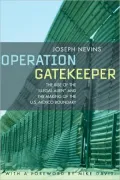
By 1994 American anti-immigration rhetoric had reached a fevered pitch, and throngs of migrants entered the U.S. nightly. In response, the INS launched "Operation Gatekeeper," the centerpiece of the Clinton administration's unprecedented effort to "regain control" of our borders. In Operation Gatekeeper, Joseph Nevins details the administration's dramatic overhaul of the San Diego-Tijauna border-the busiest land crossing in the world-adding miles of new fence and hundreds of trained agents.
Editorials
Publishers Weekly
In 1994 the Clinton administration upped the neo-protectionist ante by doubling the budget for fences and trained agents along the border between Mexico and the U.S. Journalist Joseph Nevins's Operation Gatekeeper: The Rise of the `Illegal Alien' and the Remaking of the U.S.-Mexico Boundary explores this concerted effort to prevent illegal border crossings in the context of the mid-90s economic boom and the hundreds of thousands of legal Mexican immigrants. Examining physical, political and economic attributes of the Border culture often abstracted in postmodern literary and cultural criticism, Nevins argues that Clinton's program has done little to keep undocumented immigrants from entering but has increased the dangers for them as well as inflamed anti-immigrant tendencies in the U.S. Mike Davis's introduction will help draw attention to this astute book. (Jan. 11) Copyright 2001 Cahners Business Information.Foreign Affairs
Politicians and bureaucrats often manufacture self-serving myths to promote their own narrow interests, and immigration policy is no exception. In an attempt to steal the immigration issue from the Republicans in the wake of California's notorious Proposition 187, Bill Clinton launched "Operation Gatekeeper" in 1994 with the objective of regaining "control" of the San Diego-Tijuana border, the busiest land crossing in the world. Clinton doubled the budget for law enforcement along the border and had miles of new fence constructed and hundreds of new agents trained. But in this dense analysis, Nevins demonstrates how this politically motivated policy failed to significantly reduce unauthorized border crossings. What it did do was shift these crossings away from the suburbs of San Diego and El Paso toward the deserts and the mountains. In the end, he believes, a law-enforcement approach to illegal immigration will fail because the ties between the United States and Mexico are too strong, migrants are too resourceful and creative, and Americans are too resistant to police measures. The paradox of free trade without free labor flows remains a Gordian knot that no U.S. administration has been able to untie and still please everybody. It is difficult to see any of this changing in the near future, all the more so because of September 11.Library Journal
In October 1994, the Immigration and Naturalization Service began Operation Gatekeeper. Its goal was to reduce the movement of Mexicans across the U.S. border between San Diego and Tijuana. Nevins (Berkeley), who writes for the Nation, the Progressive, the Los Angeles Times, and other publications, examines this operation in the context of immigration between these two countries. A historical account of the United States-Mexico border shows that, up through recent times, the movement of peoples between the two countries was of relatively little concern. Not until the period of 1970 to the 1990s did political pressures make securing the border a pressing national issue. In turn, this pressure popularized the concept of the illegal alien. Operation Gatekeeper itself was developed by the Clinton administration to counter efforts by Gov. Pete Wilson to restrict Mexican migration into California as well as the Proposition 187 movement to deny education, health, and social services to undocumented immigrants. While the operation did defuse anti-immigrant feelings, it made the crossing much more dangerous and resulted in an increased loss of life. This work complements Peter Andreas's Border Games: Policing the U.S.-Mexico Divide (LJ 8/00) and Pablo Vila's Crossing Borders, Reinforcing Borders: Social Categories, Metaphors, and Narrative Identities on the U.S.-Mexican Frontier (Univ. of Texas, 2000). Nevins does a good job of presenting the case, but the result is a narrowly focused work that is most appropriate for academic libraries. Stephen L. Hupp, West Virginia Univ., Parkersburg Copyright 2001 Cahners Business Information.Book Details
Published
December 13, 2001
Publisher
New York ; Routledge, 2002.
Pages
256
Format
Paperback
ISBN
9780415931052