
19th Century Irish Fiction & Prose Literature - Literary Criticism
Available on Bookshop
Write a review
Books.org participates in affiliate programs including Bookshop.org and the Amazon Services LLC Associates Program. We may earn a commission from qualifying purchases made through links on this page, at no additional cost to you.
Log in to track your reading progress.
Overview
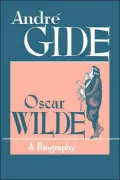
Gide, in this first English translation, defended a poet named Oscar Wilde when other poets threatened to wreck Wilde’s life and attempted to show that Wilde was an honorable man. Gide’s personal sketches are presented in this book that are in original form. This work was written during the prime of Oscar Wilde’s life. André Gide (1869-1951), French writer, whose novels, plays, and autobiographical works are distinguished for their exhaustive analysis of individual efforts at self-realization and Protestant ethical concepts; together with his critical works they had a profound influence on French writing and philosophy. Gide was born November 22, 1869, in Paris into a strict Protestant family and educated at the École Alsacienne and the Lycée Henri IV. In his first book, Les cahiers d’Andre Walter (The Notebooks of Andre Walter, 1891), Gide described the religious and romantic idealism of an unhappy young man. He then became associated with the Symbolists, but in 1894 began to develop an individualistic approach and style. In Les nourritures terrestres (The Fruits of the Earth, 1897) he preached the doctrine of active hedonism. Thereafter his works were devoted to examining the problems of individual freedom and responsibility, from many points of view. The Immoralist (1902; trans. 1930) and Strait Is the Gate (1909; trans. 1924) are studies of individual ethical concepts in conflict with conventional morality. The Caves of the Vatican (trans. 1927 and also published in English as Lafcadio’s Adventures), in which Gide ridiculed the possibility of complete personal independence, appeared in 1914. The idyll La symphonie pastorale (The Pastoral Symphony, 1919; produced as a motion picture, 1947) dealt with love and responsibility. Gide examined the problems of middle-class families and of adolescence in If It Die (1920; trans. 1935) and in the popular novel of youth in Paris, The Counterfeiters (1926; trans. 1928). Gide’s preoccupation with individual moral responsibility led him to seek public office. After filling municipal positions in Normandy (Normandie), he became a special envoy of the colonial ministry in 1925-26 and wrote two books describing conditions in the French African colonies. These reports, Voyage au Congo (1927) and Retour du Tchad (1927), were instrumental in bringing about reforms in French colonial law. They were published together in English as Travels in the Congo (1929). In the early 1930s Gide had expressed his admiration and hope for the “experiment” in the USSR, but after a journey in the Soviet Union he reported his disillusionment in Return from the U.S.S.R. (1936; trans. 1937). Many of Gide’s critical studies appeared in La Nouvelle Revue Française, a literary periodical that he helped to found in 1909 and that became a dominant influence in French intellectual circles. These essays are principally analyses of the psychology of creative artists.A celebrated and feared English ghost is outraged when the new American owners of his haunting place refuse to take him seriously and actually fight back against him.
Editorials
School Library Journal
Gr 7 Up Lovers of Oscar Wilde's stories will delight in this new illustrated version of The Canterville Ghost if the picture book format does not keep them from finding it. Wilde's story of an American family who moves into Canterville Chase and annoys a weary ghost with their lack of belief in him is a wry commentary on the ways of British nobility and of their hard-headed American cousins. Like many of Wilde's tales, this one is filled with sophisticated allusions to his social and political milieu, but ends as sentimental romance. Zwerger's wry pictures highlight this tone beautifully. Her toothless ghost is round and comical, as would suit a ghost whom no one fears, and her heroine, Virginia, is young and sweetly boyish. All of the illustrations are set against misty gray watercolor backgrounds except for the climactic scene, echoed on the front cover, in which the tiny huntsmen on the wallpaper call out to Virginia to ``Go Back.'' This will make a fine read-aloud for audiences of secondary students who are prepared to savor Wilde's ironic humor and Zwerger's delicate watercolors. Barbara Chatton, College of Education, University of Wyoming, LaramieBook Details
Published
January 1, 1949
Publisher
Philosophical Library, Incorporated
Pages
64
Format
Paperback, 1949
ISBN
9780806529707