
US & Canadian Literary Biography, British & Irish Literary Biography, Literary Biography
Log in to track your reading progress.
Overview
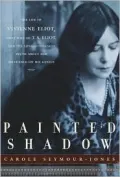
"By the time she was committed to an asylum in 1938, five years after T. S. Eliot deserted her, Vivienne Eliot was a lonely, distraught figure. Shunned by literary London, she was the "neurotic" wife whom Eliot had left behind. In The Family Reunion, he described a wife who was a "restless shivering painted shadow," and so she had become: a phantomlike shape on the fringe of Eliot's life, written out of his biography and literary history." This portrait of Vivienne Eliot, first wife of poet T. S. Eliot, gives a voice to the woman who, for seventeen years, had shared a unique literary partnership with Eliot but who was scapegoated for the failure of the marriage and all but obliterated from historical record.Editorials
Publishers Weekly
Although the history of literary marriages is littered with tragic muses and sacrificial spouses, few partnerships are considered as ill-starred as that of T.S. Eliot and Vivienne Haigh-Wood (1888-1947). History has condemned the first wife of the great American ex-patriate modernist as a neurotic, hypochondriacal harridan whose presence tormented Eliot and whose committal to an insane asylum after 17 years of marriage proved a long-overdue relief for the beleaguered genius. (Virginia Woolf memorably characterized Vivienne Eliot as "this bag of ferrets" hanging around the poet's neck.) Seymour-Jones's biography, while often stressing Vivienne's victimhood, is a nuanced portrait of an independent spirit becoming unhinged. In their early years together, the Eliots were infamous for their constant peregrinations, their chronic yet evasive medical problems, their money troubles and persistent unhappiness. The lively banter and free sexual mores prized by their friends in the literary avant-garde did little to strengthen their marital stability. Glimpses of their oppressive, sexually silent marriage appear in The Waste Land, Sweeney Agonistes and The Family Reunion-which masterpieces, Seymour-Jones (Beatrice Webb) argues, Eliot might never have written without his intolerable muse. She also endeavors to restore Vivienne's status as a close literary collaborator. As an intellectual biography of the Eliots, this volume should be of considerable interest to scholars of modernism. It stands as a chronicle of a fine mind highly unstable but not necessarily insane. Illus. not seen by PW. Agent, Kim Witherspoon. (Apr.) Forecast: Though its length may intimidate some, this could break out beyond the hard-core poetry crowd to readers interested in women's lives, particularly in efforts to rehabilitate maligned muses (think Zelda and Brenda Maddox's Nora). Copyright 2002 Cahners Business Information.Library Journal
In this first-ever biography of T.S. Eliot's first wife, Vivienne Haigh-Wood, Seymour-Jones (Beatrice Webb) sets out to vindicate Vivienne's role in her husband's life. Traditionally viewed as a helpless neurotic who hindered the poet's creativity, Vivienne is depicted here as talented in her own right, a muse and literary partner to her famous husband. Eliot is presented in a very negative light, with many neuroses of his own some triggered by his alleged closet homosexuality, for which Seymour-Jones builds a strong case. Vivienne, the author suggests, "slipped into non-being the longer she lived with Eliot." Her so-called hysteria, probably hormonal in origin, resulted in bizarre medical treatments that only made the problems worse. The author concludes that Vivienne was probably bipolar but not insane, although she spent the last years of her life in an institution. Seymour-Jones's perspective is not totally new; for instance, Michael Hastings's 1985 play Tom and Viv (which was also a film) suggests that Eliot was equally to blame for their dysfunctional marriage. However, Seymour-Jones is the first to do a scholarly study of Vivienne's life that documents most (but not every last one) of her conclusions. She includes a lengthy bibliography of standard Eliot sources along with Vivienne's own writings. This work makes a definite contribution to our understanding of Eliot and is recommended for academic and large public libraries Denise J. Stankovics, Rockville P.L., Vernon, CT Copyright 2002 Cahners Business Information.Booknews
Subtitled Welsh-born scholar and writer Seymour-Jones spent five years researching Eliot's (1888-1947) life. Rather than the insane shrew that literary history has portrayed her to be, she finds Eliot to have been an artistic, energetic, gifted woman. Annotation c. Book News, Inc., Portland, OR (booknews.com)Kirkus Reviews
English biographer Seymour-Jones (Beatrice Webb, 1992) clinically dissects at agonizing length what surely must be one of the unhappiest marriages in literary history. T.S. Eliot was one of the great modernist poets and a shining star of Anglican orthodoxy, but he certainly wasn't a nice man, especially insofar as his first wife was concerned. The author stirringly defends Vivienne Eliot, remembered by literary history as a harridan who made her husband miserable primarily because the gossipy Virginia Woolf disliked the lowborn Mrs. Eliot. ("This bag of ferrets is what Tom wears around his neck," Woolf famously wrote.) Eliot was largely responsible, Seymour-Jones argues, for driving the already unhinged Vivienne into full-tilt madness. While relying on her as a muse and borrowing her Cockney voice for The Waste Land, he kept his distance, treated her cruelly, and fairly pushed her into the arms of father-figure Bertrand Russell in exchange for cash and academic favors. Why all this nastiness? Eliot was gay, Seymour-Jones charges, though he could never really bring himself to admit it and threatened suit against critics and journalists who suggested as much; "at the core of the revulsion Eliot felt for Vivienne," she writes, "was her very femininity, which reminded him of the shameful, feared feminine part of himself." Though she relies on indirect evidence and more than a little speculation, and though she goes on much too long, Seymour-Jones makes her case. In doing so, she rescues poor Vivienne Eliot from the dustbin of history, even though literary scholars may be loath to incorporate her findings into their accounts of the revered poet who gave the world "Ash Wednesday"—but also, letit be remembered, Cats. Convincingly damns Eliot not for his sexual orientation, whatever it may have been, but for his inhumanity and hypocrisyBook Details
Published
April 1, 2002
Publisher
New York : Nan A. Talese/Doubleday, 2002.
Pages
720
Format
Hardcover
ISBN
9780385499927