
Audiology & Speech Pathology, Phonetics
Log in to track your reading progress.
Overview
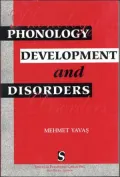
Written by a leading teacher in phonology, Phonology: Development and Disorders represents the definitive textbook for students. Insightful and well structured with many student-friendly features, this essential introductory textbook on articulation and phonology fully meets the basic needs of speech-language pathology students. Added to the value of this book is the author's valuable teaching experience, gained through working with students from diverse fields, and which further enhances this text with excellent phonological examples from many world languages.The book contains black-and-white illustrations.
Editorials
From The Critics
Reviewer: Colleen K. Worthington, MS(University of Maryland)Description: This is an introductory level text that presents a comprehensive overview of phonology from a perspective firmly rooted in the field of linguistics. It is devoted to two major aspects of this complex topic: development and disorders.
Purpose: The author's stated purpose in writing this book is to provide crucial technical knowledge about phonology as it relates to remediation in a comprehensible and useful manner. It reaches for a delicate balance between detailed information coming from a technical field and use of that information in applied fields.
Audience: The primary audience is speech-language pathology students and students from other disciplines with an interest in remediation related to speech sound systems, such as ESL (English as a second language) specialists. The author's experience in teaching students from diverse interests and backgrounds facilitates presentation of material from varying angles.
Features: This book provides a number of pertinent, high-quality illustrations. Theoretical models of phonological analysis balance the discussions of practical application and the reader's perspective about phonology is broadened beyond the English language through frequent examples from other languages. The table of contents gives the reader a good overview of the book's contents. However, the index seems less user-friendly and somewhat sparse for an introductory text with so much jargon. At the end of each chapter, sample exercises are provided which should prove valuable to both instructors and students. The second unique feature is the inclusion of a section on "clinical relevance" in four of the ten chapters.
Assessment: Information is presented in chronological sequence rather than organized by topic. The absence of conceptual continuity may be somewhat problematic for students in fields other than traditional linguistics, However, this text on phonology serves as a comprehensive, well-written source of technical information from a linguistic perspective that is often lacking in the traditional education of speech-language pathology students. It would serve as a useful text for undergraduate or graduate courses in phonology and would be a worthwhile addition to departmental libraries.
Colleen K. Worthington
This is an introductory level text that presents a comprehensive overview of phonology from a perspective firmly rooted in the field of linguistics. It is devoted to two major aspects of this complex topic: development and disorders. The author's stated purpose in writing this book is to provide crucial technical knowledge about phonology as it relates to remediation in a comprehensible and useful manner. It reaches for a delicate balance between detailed information coming from a technical field and use of that information in applied fields. The primary audience is speech-language pathology students and students from other disciplines with an interest in remediation related to speech sound systems, such as ESL (English as a second language) specialists. The author's experience in teaching students from diverse interests and backgrounds facilitates presentation of material from varying angles. This book provides a number of pertinent, high-quality illustrations. Theoretical models of phonological analysis balance the discussions of practical application and the reader's perspective about phonology is broadened beyond the English language through frequent examples from other languages. The table of contents gives the reader a good overview of the book's contents. However, the index seems less user-friendly and somewhat sparse for an introductory text with so much jargon. At the end of each chapter, sample exercises are provided which should prove valuable to both instructors and students. The second unique feature is the inclusion of a section on "clinical relevance" in four of the ten chapters. Information is presented in chronological sequence rather than organized by topic.The absence of conceptual continuity may be somewhat problematic for students in fields other than traditional linguistics, However, this text on phonology serves as a comprehensive, well-written source of technical information from a linguistic perspective that is often lacking in the traditional education of speech-language pathology students. It would serve as a useful text for undergraduate or graduate courses in phonology and would be a worthwhile addition to departmental libraries.Booknews
An introductory text on articulation and phonology for first-year speech-language pathology students. Chapters cover phonetics; phonemics; distinctive features; phonological processes; phonological development and disordered phonology; naturalness and markedness; bilingual phonology; syllables and feet; and feature geometry and underspecification. Includes chapter-end exercises. Annotation c. by Book News, Inc., Portland, Or.3 Stars from Doody
Book Details
Published
March 3, 1998
Publisher
Singular Publishing Group Inc.
Pages
335
Format
Paperback
ISBN
9781565937024