
Historical Events in Art, Individual Artists, French Art, Cubism, Art Subjects - General & Miscellaneous, Modern Art
Log in to track your reading progress.
Overview
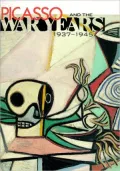
This book draws upon new research and works that, in some cases, were held out of public view in Picasso's own collection to explore the critically important -- but still under-studiedperiod of his life from the time of the Spanish Civil War through World War II and the Nazi occupation of France. This span of years is marked by some of the most intensely personal and expressive work of his long and diverse career. This book is published in conjunction with a major exhibition organized by the Fine Arts Museums of San Francisco. It traces Picasso's responses to the cataclysm of war as manifested in a lengthy series of figure paintings, still lifes, portraits, and cityscapes, amplified by prints, drawings, and photographs, drawn from collections all around the world.Synopsis
Describes the influence of the war and Picasso's life in occupied Paris on the subjects and themes of his painting of the periodEditorials
From Barnes & Noble
The accompanying catalogue to an exhibit that ran at the Fine Arts Museum of San Francisco and the Guggenheim in New York, Picasso and The War Years: 1937-1945 draws upon new research and freer access to works that have been out of public view to explore a somewhat neglected period in the artist's life, one that yielded some of his most vivid and intensely personal work.Library Journal
Despite Picasso's being one of the most written about artists of all times, students of the artist will welcome these examinations of his less frequently studied war years. Picasso and the War Years brings together 83 fine reproductions of works--from a show that just moved from San Francisco to New York--and seven wonderfully readable essays examining the style and content of works from these years. Curator and editor Nash has wisely surveyed work from the time of the Spanish Civil War as well as World War II, as it was Spain's involvement that made Picasso feel politics more acutely than ever before. It is key to understanding his work in this period to know that Picasso was already a world-renowned painter at that point; this fame allowed him to remain in occupied France despite Nazi surveillance and denunciation as a "degenerate artist." His status, his largely apolitical past, and his antifascist sentiments resulted in not so much an expression of specific political beliefs as an expression of defiance. In content, this meant a "modern alternative to history painting," as one essayist astutely names it; socially, his continuing to work with complex themes carried a symbolic significance for other painters. Elsewhere in the book are discussions of such technical issues as the influence of Goya and the increasingly gray palette. Wofsy offers the seventh volume in a catalogue raisonne authorized by Picasso's estate that will eventually span from 1885 to 1973 in well over 30 volumes. As with other volumes in the series, the vast majority of the book is given to black-and-white reproductions of a reasonable size; each is captioned with title, date, media, size, and cross reference to other standard guides to the artists work. Otherwise, there is only brief prefatory materials and two concluding concordances. Despite the price, no serious art collection should be without this work; Nash's important and beautiful work deserves a place in all academic and larger public libraries.--Douglas McClemont, New YorkBook Details
Published
November 16, 1998
Publisher
Thames & Hudson Ltd
Pages
240
Format
Hardcover
ISBN
9780500092743