
Historical Biography - United States - 19th Century, Historical Biography - United States - Colonial & 18th Century, United States History - Religious Aspects, Saints - Christian Biography, Roman Catholic Church History, Catholics - General & Miscellaneou
Log in to track your reading progress.
Overview
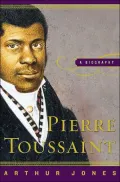
Pierre Toussaint was born in Saint Domingue (now known as Haiti) in 1781. The child of a slave on a plantation owned by the Berards, a prosperous French family, he was raised as a devout Catholic. When a slave uprising forced the Berards to flee the island in 1797, Toussaint came to New York City as the family's servant. As a black man and as a Catholic, Toussaint found that his new home held dangers of its own: Slaves were brutalized by their owners, free blacks were beaten in the streets, and anti-Catholic sentiment was rampant. But New York also offered him new opportunities. When Toussaint's talents as a hairstylist -- along with his charming, refined manners -- made him a favorite of the women in New York's upper-class families, he began earning a substantial income. He was given his freedom in 1807, married in 1811, and devoted his life to helping former slaves, supporting the Church, and taking care of the poor and oppressed, all while helping to raise funds for the city's first cathedral.In the first biography of Toussaint written for a mainstream audience, Arthur Jones charts a life buffeted and scarred by poverty, prejudice, and political upheaval, and shows how Toussaint's faith, independence of mind, and sense of personal dignity served as lifelong sources of strength. Drawing on letters from Toussaint's friends and admirers, black and white alike, as well as on a wealth of historical sources, Jones brings to life a man who, by defying the strictures of a racist society, became an example not only for other black people but for oppressed and maligned immigrants of all backgrounds.
Editorials
Kirkus Reviews
The rags-to-respect story of a Haitian-born slave whose emigration to NYC unfolded a lifetime of good works in the name of faith that now prompt proposals to make him the first black American Catholic saint. Not all Haitian slaves were even baptized, National Catholic Reporter editor Jones reports, since France sent only four priests to minister to tens of thousands in the colony then called Saint Domingue. Fleeing British invaders, a slave revolt, and yellow fever, the Bérard family left their plantation and moved to New York in 1797, bringing with them a contingent of slaves that included the teenaged Pierre Toussaint. Practicing Catholics had been banned from New York until the mid-18th century, and Protestant bias was still rampant, the author reminds us, so Toussaint had a "fourth strike" to overcome in addition to his race, slave status, and inability to speak English. (Jones does not, however, gloss over the fact that Mother Church turned a blind eye to slavery.) Pierre was apprenticed to a hairdresser and in short order became known among some of the city’s best families as an expert coiffeur who was also well mannered and discreet. Income flowed; Toussaint bought his sister’s freedom and helped liberate other blacks, although he remained a slave himself until manumitted by his owner’s widow on her deathbed in 1807. He married, adopted an orphaned niece, and became active in raising funds for New York City’s first orphanage and first cathedral. The Great Fire of 1835 wiped out a small fortune that personal industry and judicious investments had garnered, ending Toussaint’s plan to retire in Paris, Jones surmises. But he remained active in charities and black causes for the rest ofhis life. Focusing on his subject’s activities, the author gives only peripheral mention to the ongoing process of Toussaint’s canonization. An engaging picture of a life that was, in itself, a miracle.Book Details
Published
September 1, 2003
Publisher
New York : Doubleday, 2003.
Pages
352
Format
Hardcover
ISBN
9780385499941