
Rodents & Small Mammals, Animal Habitats
Log in to track your reading progress.
Overview
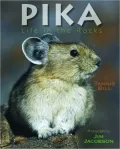
The pika survives where life is rocky. A male pika scurries across a stone pile high in the mountains. He nips leafy twigs off bushes and piles them in the shelter of a rocky den. This hamster-size cousin of the rabbit builds a hay pile as big as a bathtub. In the winter, he feeds on his hay pile, tunnels through the snow for lichens, and pops out for low-growing plants. The story of how the pika avoids predators, survives the cold, and sings for a mate will enthrall young readers. Tannis Bill's simple text makes the true story of the pika accessible to all. Jim Jacobson's stunning photographs capture the pika in the act of living naturally.
Synopsis
The pika survives where life is rocky. A male pika scurries across a stone pile high in the mountains. He nips leafy twigs off bushes and piles them in the shelter of a rocky den. This hamster-size cousin of the rabbit builds a hay pile as big as a bathtub. In the winter, he feeds on his hay pile, tunnels through the snow for lichens, and pops out for low-growing plants. The story of how the pika avoids predators, survives the cold, and sings for a mate will enthrall young readers. Tannis Bill's simple text makes the true story of the pika accessible to all. Jim Jacobson's stunning photographs capture the pika in the act of living naturally.Editorials
Children's Literature -
Pikas are small animals that live tucked away in the Rocky Mountains. Though they look more like mice or hamsters, they are related to rabbits. The beautiful photographs are the highlight of this book, and they vividly portray how hard this tiny animal must work to survive the long, cold winter in the mountains. In order to have enough to eat over the winter, a pika must gather leaves, berries, flowers, and grasses and erect a pile that "is as large as a bathtub." Since pikas do not hibernate, they tunnel through the deep winter snow many times each day to eat from the food piles. Pikas must also cleverly outwit enemies, such as the hawk and weasel. They do this by hiding in small cracks in rocks or by becoming completely quiet and unmoving. After mating, a female gives birth to three babies known as pups. After about two months, the young pikas leave the nest to find new sites for homes. There is further information found at the end of the book: a page of facts about pikas, another relating to the family tree and the relationship to rabbits and hares, and another provides information about predators. A glossary and bibliography complete the book. Youngsters who are interested in animals will enjoy this book as most have probably had very little exposure to information about pikas. I recommend purchasing this book. Reviewer: Sylvia FirthSchool Library Journal
PreS-Gr 2—Short sentences paired with brilliantly distinct photography show a little "rock rabbit" gathering food and building a "hay pile as large as a bathtub," his food supply for the winter. Alert to danger and focused on survival, the pika is a hard worker that eats nine times a day and tunnels through the snow to his food cache. Though this small animal is a recently failed candidate for endangered status, Bill's note to older readers links to the best Web-based resources to keep up-do-date with its status. Back matter includes facts, a habitat map, and photos of the animal's family and predators. Heads up to librarians in California, Colorado, Idaho, Montana, Nevada, New Mexico, Oregon, Utah, Washington, and British Columbia. This critter lives in your state, and your young patrons will be enchanted by this book.—Nancy Call, Santa Cruz Public Libraries, Aptos, CAKirkus Reviews
Bill's debut introduces young readers to the pika, a relative of rabbits and hares. Photographs follow one particular pika as he gathers a pile of plants in preparation for winter. Weasels and hawks are just two of the predators the pika must be wary of, and other pikas might try to steal his hard-won food stores. The narrative sees readers through the spring as the pika mates and the babies mature. The author's conversational style builds a little suspense into her tale-readers will find themselves rooting for the tiny pika. A large font and relatively easy vocabulary make this a good choice for beginning readers. Jacobson's photographs give readers a marvelous up-close view of the animals-most are shown at least half life-size. He captures the many particularities of this animal as well, from making sounds and intent listening to gathering plants and growing a winter coat. Prominently absent, however, are the pika babies the text mentions. The book also would have benefited from the inclusion of a map to help young readers in placing the pika's Rocky Mountain habitat. A relatively in-depth and accessible look at a lesser-known animal. (pika facts, predators, family, resources, author note, glossary) (Informational picture book. 5-8)Book Details
Published
January 1, 2010
Publisher
Boyds Mills Press
Pages
32
Format
Hardcover
ISBN
9781590788035