
Botany - Morphological & Physiological
Available on Bookshop
Write a review
Books.org participates in affiliate programs including Bookshop.org and the Amazon Services LLC Associates Program. We may earn a commission from qualifying purchases made through links on this page, at no additional cost to you.
Log in to track your reading progress.
Editorials
Children's Literature -
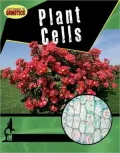
How do plant cells work? How are botanists using the genetic information they are learning from studying plant cells? Author Dowdy answers these questions and more in this forty-eight page picture book. Chapters include "Tiny Treasure, Seeds of Science," and "Plant Cell Science." Plants provide food, clothing, medicine, and oxygen. Botany is the name of the science that examines plants. In the 1800s, a monk named Gregor Mendel had ideas about how plants inherit certain traits such as color and height. He tested his ideas on garden pea plants. His ideas were not accepted until the 1900s. Today, he is known as the Father of Genetics. Most plants have the same types of cells. Leaves contain cells that store food and water. In the laboratory, a cell's nucleus can be seen in the middle of the cell. Plants are also able to produce their own food. They need sunlight and water to do this. Scientists are working on encouraging genetic diversity. An example is the modification of cotton in the United Kingdom to resist pests. The author has packed lots of information into this soft-cover book. Back material includes a science experiment, further reading, websites, and a glossary. Clear, colorful illustrations highlight the text. Part of the "Let's Relate to Genetics" series. Reviewer: Della A. YannuzziSchool Library Journal
Gr 6-8–Problems mar this series. Background science, current research, and future possibilities are presented in large type and with numerous photos and occasional diagrams and sidebars. Controversial topics include questions for consideration–for example, an “In the Lab” sidebar in Cells explaining one of the roles of brain cells asks, “Can Playing Violent Video Games Make You Violent?” Kids will appreciate Genetic Engineering’s humorous introduction and use of analogies. Unfortunately, the lightheartedness isn’t continued in the other books; as topics become more challenging, the writing gets denser. Also, in an effort to simplify meiosis, important information and terminology are absent, muddying the description that repeats in Cells, Animal Cells, and Plant Cells. Occasionally, topics and photos are out of order, and the closing “Notebook” experiments are often more like kitchen fun than science.Book Details
Published
August 1, 2009
Publisher
Crabtree Publishing Company
Pages
48
Format
Paperback
ISBN
9780778749639