
Politics & Government - General & Miscellaneous
Log in to track your reading progress.
Overview
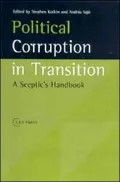
This book, a wide-ranging comparative review of corruption during the transition from communism, is a strong statement against corruption. It is labeled, however, a skeptic's handbook because its treatment is entirely different from the usual preaching and excommunications. The real strength of the seventeen essays lies in their shared skepticism about superficial approach, including about external pressures on transitions states, like the much cited CPI (corruption perception index) of Transparency International.The seventeen authors were selected and invited in the frame of a joint Princeton-CEU project on the theme and have produced a carefully edited volume. Some of the chapters are more theoretical others based on sociological surveys, but all read easily. The essays contain many anecdotical references on the issue such as the astonishing parallel of Korea and the Czech Republic, examples of rather clean low-level governance coexisting with massive corruption cases at the top; or the incidences of counter-effects of Soviet and post-soviet anticorruption campaigns; but the reader gets examples from Alaska as well. Shallow moralizing is nowhere to find.
Book Details
Published
April 1, 2002
Publisher
Central European University Press
Pages
522
Format
Paperback
ISBN
9789639241473