
Other Psychology, Testing & Assessment - Psychology, Forensic Psychiatry & Psychology
Log in to track your reading progress.
Overview
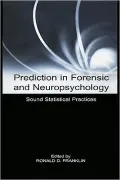
Psychologists are under increasing pressure to demonstrate the ecological validity of their assessment procedures--to show that the recommendations concluding their evaluations are relevant to urgent concerns in the legal and social policy arenas, such as predicting dangerousness, awarding compensation, and choosing a custodial parent. How much damage does a referred patient have? Who or what "caused" the damage? What impact will it have on his or her future life, work, and family? And what can be done to remediate the damage?The purpose of this book is to provide sound objective methods for answering these questions. It integrates the knowledge of experienced practitioners who offer state-of-the-art summaries of the best current approaches to evaluating difficult cases with that of basic theorists who describe emerging methods in both predictive and inferential statistics, such as Bayesian networks, that have proven their value in other scientific fields. Arguably, the enterprise of psychological assessment is so interdependent with that of data analysis that attempts to make inferences without consideration of statistical implications is malpractice. Prediction in Forensic and Neuropsychology: Sound Statistical Practices clarifies the process of hypothesis testing and helps to push the clinical interpretation of psychological data into the 21st century. It constitutes a vital resource for all the stakeholders in the assessment process--practitioners, researchers, attorneys, and policymakers.
Book Details
Published
December 1, 2002
Publisher
Taylor & Francis, Inc.
Pages
328
ISBN
9781410607089