
African Americans - Mass Media, African Americans - Performing Arts, Ethnic & Minority Studies - Media Studies, Television Broadcasting - Social Aspects
Log in to track your reading progress.
Overview
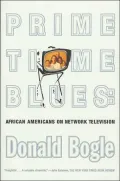
A landmark study by the leading critic of African American film and televisionPrimetime Blues is the first comprehensive history of African Americans on network television. Donald Bogle examines the stereotypes, which too often continue to march across the screen today, but also shows the ways in which television has been invigorated by extraordinary black performers, whose presence on the screen has been of great significance to the African American community.
Bogle's exhaustive study moves from the postwar era of Beulah and Amos 'n' Andy to the politically restless sixties reflected in I Spy and an edgy, ultra-hip program like Mod Squad. He examines the television of the seventies, when a nation still caught up in Vietnam and Watergate retreated into the ethnic humor of Sanford and Son and Good Times and the poltically conservative eighties marked by the unexpected success of The Cosby Show and the emergence of deracialized characters on such dramatic series as L.A. Law. Finally, he turns a critical eye to the television landscape of the nineties, with shows such as The Fresh Prince of Bel Air, I'll Fly Away, ER, and The Steve Harvey Show.
Editorials
Essence
A revealing, thought-provoking and richly detailed look at the small screen’s highlights . . .Julie Salamon
[Bogle’s] thoroughness and insightful analyses are admirable. This is a valuable chronicle.Julie Salamon
...his thoroughness and insightful analyses are admirable. This is a valuable chronicle.— New York Times Book Review
Ken Tucker
. . . Bogle’s rigorous history is a valuable one for the depth of its research and its refusal to patronize . . .Patricia Chui
The author's meticulous research and ambitious inclusiveness make the book feel more like a catalog than a social narrative at times, but Primetime Blues is an important chronicle of African-American and American television history.—Brill's Content
Renee Graham
There was a time when seeing an African American face on television was so rare, many black folks would call their families and friends to make sure everyone tuned in. It didn't matter if it was Pearl Bailey on The Ed Sullivan Show or Greg Morris on Mission: Impossible - it was an event. Those viewers understood the power of television to shape society's racial and cultural attitudes. Also, they grasped the importance of seeing their lives and faces reflected in its flickering images. Donald Bogle's exhaustive, entertaining Primetime Blues recalls the long history of African Americans on network television. It has been an uneasy history, but one that has clearly, if slowly, progressed from the stereotypical buffoonery of Amos 'n' Andy to the buppie comforts of The Cosby Show to today's sophisticated black characters on such programs as Gideon's Crossing and Boston Public. Singer-actress Ethel Waters was invited by NBC to perform on an experimental broadcast in 1939. The one-night-only "Ethel Waters Show," Bogle writes, "led the way for everything of color to come over the next half-century." A radio staple created by two whites (who also played the title characters), Amos 'n' Andy concerned the exploits of two bumbling black men. Premiering on TV with an all-black cast in 1951, it was a hit, but it was criticized by the NAACP for its "perpetuation of stereotyped characterizations." Bogle (who also wrote the definitive history of blacks in film, "Toms, Coons, Mulattoes, Mammies, and Bucks") has a prodigious command of this subject. He acknowledges advancements but also criticizes 1990s shows like The Wayans Bros. and Martin for reviving the communal coonery of 1950s television. For all its improvements, Bogle says, TV has been "for many African-Americans, a frustrating and exasperating experience.... " But, he notes, as singer Etta James once said of black TV pioneers: "All the black actors were heroes. They might play fools on the screen, but folks in the neighborhood knew it took more than a fool to break into lily-white Hollywood."— RealCities RealBooks
Publishers Weekly
From its earliest days, television has always had a problem with color. The advent of Technicolor didn't change the fact that most actors on TV were white. Even in the mid-1970s, when African-American actors began appearing more regularly on network shows, the roles open to them were rigidly circumscribed. In this thoroughly researched, witty and often shocking social history, media scholar Bogle fashions an in-depth chronicle of the way television has mirrored and influenced the politics of race in the U.S. His analysis remains attuned to how the earliest black performers--"Eddie" Rochester on The Jack Benny Show; Ethel Waters, Hattie McDaniel and Louise Beavers playing the indefatigably cheerful black maid Beulah; and Alvin Childress and Spencer Williams in Amos n' Andy--managed to communicate authentically with African-American viewers, despite often finding themselves "cast in parts that were shameless, dishonest travesties of African American life and culture." Situating its critique within a broad economic and industry analysis, the book addresses such major issues as the pressure of sponsors and the advent of cable on the portrayal of African-American subject matter. The author of Dorothy Dandridge and Toms, Coons, Mulattos, Mammies, & Bucks, Bogle pulls no punches (e.g., chastising the popular Sanford and Son for what he sees as its anti-Asian racism and homophobia). This major new work in television and media studies will be welcomed by both academics and general readers. 60 b&w photos. Agent, Marie Brown. 5-city author tour. (Feb. 24) Copyright 2000 Cahners Business Information.Library Journal
The history of network television is filled with examples of talented black actors tackling memorable roles in noted primetime television series. In scholarly yet accessible fashion, Bogle (history, New York Univ.; Dorothy Dandridge: A Biography) brings these examples together. His book is particularly notable as perhaps the first complete chronicle of the evolution of black television from its inception in the 1940s to the present. The author, who has covered the exploits of black TV and media personalities before (he recently appeared on an E! Entertainment Network biography of Josephine Baker), here shows us that people of color have helped define network television as we know it today and continue to contribute creatively to the medium. His illuminating and entertaining study is recommended for all popular TV and media sections. [Previewed in Prepub Alert, LJ 10/15/00.]--David M. Lisa, Wayne P.L., NJ Copyright 2001 Cahners Business Information.From The Critics
Prime Time Blues considers both the potential and the disappointment of the television medium as a vehicle for fostering equality and civil rights, examining African Americans on network television and the shows which have fostered racial stereotyping through dramas and shows. Television has distorted race images in the past and continues to do so today: Prime Time Blues explores exactly how.Book Details
Published
February 1, 2002
Publisher
New York : Farrar, Straus and Giroux, 2001.
Pages
448
Format
Paperback
ISBN
9780374527181