
Ethics & Moral Philosophy - Theoretical, 20th Century British Philosophy, Classics By Subject
Available on Bookshop
Write a review
Books.org participates in affiliate programs including Bookshop.org and the Amazon Services LLC Associates Program. We may earn a commission from qualifying purchases made through links on this page, at no additional cost to you.
Log in to track your reading progress.
Overview
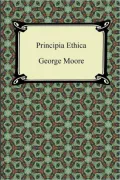
George E. Moore (1873-1958) was a hugely influential philosopher of the 20th century. Moore spent most of his career concerned with ethics. Along with Bertrand Russell, Ludwig Wittgenstein, and Gottlob Frege, he developed the analytical tradition of modern philosophy, using a scientific and even mathematical approach to logic and reason. Also a member of the Bloomsbury Group, Moore made cultural waves, become a sort of intellectual celebrity of his day. His 1903 monograph "Principia Ethica" has become a foundational text for modern ethics. At the heart of this classic is an examination of "good". What is this concept and how is it defined? Moore contests that "good" is indefinable, only to be known and understood through a direct experience of "good". This, of course, has broad repercussions when examining ethics. "Principia Ethica," then further examines moral intuition, the naturalistic fallacy, and organic unity. Moore takes up these issues with lucidity and eloquence, making this text a true pleasure to read. A pillar of modern philosophy, "Principia Ethica" continues to be standard reading for any student of philosophy, resonating with an increasingly complex world.Book Details
Published
January 1, 2012
Publisher
Neeland Media
Pages
142
Format
Paperback
ISBN
9781420945454