
Women's Fiction, Latin American Fiction
Available on Bookshop
Write a review
Books.org participates in affiliate programs including Bookshop.org and the Amazon Services LLC Associates Program. We may earn a commission from qualifying purchases made through links on this page, at no additional cost to you.
Log in to track your reading progress.
Overview
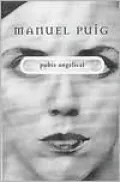
In this artful fusion of espionage thriller and science fiction, Manuel Puig tells one story shared by three women - an actress in the 1930s, living in her husband's fairy-tale castle; a young woman in Mexico City in the 1970s, convalescing in a hospital; and a futuristic cyborg sex slave, occupying an artificial landscape. In the haunting and mysterious language for which he is renowned, Puig explores the links between these women, as well as the links between genders and generations.Editorials
Publishers Weekly -
Puig, author of Kiss of the Spider Woman, has produced a novel of feminine reverie and feminist polemic. At its center is a dialogue between two womenone possibly dying, the other attending herthat is grounded in the musings of women in love, serving others, revengeful and disillusioned. These two women hold opposing political positions and express their pain in both an emotional texture and a feminist context. Around this core dialogue, Puig places, in turn, a dream, a spy-fable and science fiction sequences that suggest high literary ambitions but do not arouse the reader's curiosity. These devices seem to exist purely as style, portending great insights but revealing very little. All in all, this is a curious and disappointing exercise. 30,000 first printing; major ad/promo. (January)Library Journal
His novel Kiss of the Spider Woman having been made into an acclaimed movie, Argentinian Puig will now command attention from readers not previously familiar with his fiction. In Pubis Angelical he interweaves three stories, the first about a beautiful Viennese actress held captive in a mysterious marriage to a World War II munitions maker. The second and most interesting story, since it encompasses a history of Peronism, concerns an Argentinian refugee, dying in a Mexico City hospital, and her conversations with an old friend and an old lover. The third narrative is a futuristic spy thriller about a secret agent called W218. The implication is that one of the three women is real, the others fantasies or projections. Feminist and political themes are clear; but, except for the moving story of the dying woman, the novel is more confusing than compelling.Janet Wiehe, P.L. of Cincinnati and Hamilton Cty.Book Details
Published
January 1, 2000
Publisher
University of Minnesota Press
Pages
248
Format
Paperback
ISBN
9780816636815