
Israel/Palestine - History (Modern), Israel/Palestine - Politics & Government, General & Miscellaneous - Politics & Government, Israel/Palestine - History - General & Miscellaneous, Bureaucracy & Civil Service
Log in to track your reading progress.
Overview
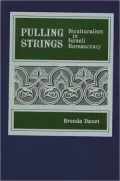
This is a book about the use of personal influence, protektzia, in Israel. All over the world, in both democratic and socialist societies, there exists some degree of recognition of the rights of citizens to complain about unjust treatment in organizational encounters. While the goals and actual functioning of complaint-handling devices may vary, bureaucratic role relations are ideally governed by the principles of universalism, specificity, and affective neutrality. In fact, patterns of actual behavior frequently differ dramatically from this model, giving rise to practices from bribery and embezzlement to nepotism, patronage, and what is referred to in the United States as "pulling strings." In Israel, protektzia is widespread.This book is a major contribution to the systematic sociological study of this phenomenon. Drawing on the literature on the functioning of public administration around the world, Danet develops a theory about the conditions under which deviations from universalistic norms occur, distinguishing four patterns of organizational culture. The theory is then tested in a case study of bureaucratic encounters in Israel.
Danet's fascinating study brings new insights to the debate regarding the cultural contradictions that continue to confront the still-emerging Israeli society. The conclusions and classifications of her theory prove invaluable as well to all those interested in organizational culture, comparative public administration, and dispute-processing in general.
Synopsis
This is a book about the use of personal influence, protektzia, in Israel. All over the world, in both democratic and socialist societies, there exists some degree of recognition of the rights of citizens to complain about unjust treatment in organizational encounters. While the goals and actual functioning of complaint-handling devices may vary, bureaucratic role relations are ideally governed by the principles of universalism, specificity, and affective neutrality. In fact, patterns of actual behavior frequently differ dramatically from this model, giving rise to practices from bribery and embezzlement to nepotism, patronage, and what is referred to in the United States as "pulling strings." In Israel, protektzia is widespread.This book is a major contribution to the systematic sociological study of this phenomenon. Drawing on the literature on the functioning of public administration around the world, Danet develops a theory about the conditions under which deviations from universalistic norms occur, distinguishing four patterns of organizational culture. The theory is then tested in a case study of bureaucratic encounters in Israel.
Danet's fascinating study brings new insights to the debate regarding the cultural contradictions that continue to confront the still-emerging Israeli society. The conclusions and classifications of her theory prove invaluable as well to all those interested iorganizational culture, comparative public administration, and dispute-processing in general.
Book Details
Published
September 30, 2009
Publisher
State University of New York Press
Pages
288
ISBN
9781438400464