
1991 - Present (Post-Soviet Russia) - History, Russia (Federation) - History - Political Aspects, Russia & Former Soviet Union - Politics & Government
Log in to track your reading progress.
Overview
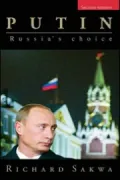
The new edition of this extremely well-received political biography of Vladimir Putin builds on the strengths of the first edition to provide the most detailed and nuanced account of the man, his politics and his profound influence on Russian politics, foreign policy and society. New to this edition:
- analysis of Putin's second term as President
- more biographical information in the light of recent research
- detailed discussion of changes to the policy process and the élites around Putin
- developments in state-society relations including the conflicts with oligarchs such as Khodorkovsky
- review of changes affecting the party system and electoral legislation, including the development of federalism in Russia
- details on economic performance under Putin, including more discussion of the energy sector and pipeline politics
- Russia’s relationship with NATO after the ‘big bang’ enlargement, EU-Russian relations after enlargement, and Russia’s relations with other post-Soviet states
- the conclusion brings us up-to-date with debates over the question of democracy in Russia today and the nature of Putin’s leadership and his place in the world.
Putin is essential reading for all scholars and students of Russian politics.
Editorials
Foreign Affairs
Yet another political biography of Vladimir Putin, which raises the question, Why so many of him and not of the country? In fact, Sakwa comes close to writing the latter. After asking, "Who is Putin?" (answer: a functional contradiction, both a liberal and an authoritarian, in search of an equilibrium that will lead to progress and order), he lays out Putin's agenda: reform, but through the "politics of normality." From there he goes on to explore how Putin and his entourage consolidated power and then how they reworked the state-society relationship, altered the political system, rebalanced ties between the center and regions, set about "reforming the nation," advanced capitalism, and adjusted Russia's place in the world. Sakwa is sympathetic to Putin, trusts his motivations, and sees him as suited to Russia's current needs, but he is not sure that the balancing act can be maintained-or that it will lead to something durable, progressive, and genuinely democratic.Book Details
Published
September 7, 2007
Publisher
London ; Routledge, 2008.
Pages
388
Format
Book
ISBN
9780203931936