
English Fiction & Prose Literature - General & Miscellaneous - Literary Criticism, Modernism - Literary Movements, 20th Century American Literature - General & Miscellaneous - Literary Criticism, Gay & Lesbian Literary Studies, English Fiction & Prose Lit
Available on Bookshop
Write a review
Books.org participates in affiliate programs including Bookshop.org and the Amazon Services LLC Associates Program. We may earn a commission from qualifying purchases made through links on this page, at no additional cost to you.
Log in to track your reading progress.
Overview
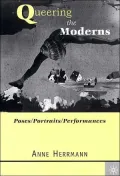
In Queering the Moderns, Anne Herrmann revisits the narrative of literary modernism and the historical uses of the term “queer” to explore the emergence of identities specific to modernism. "Queer" in the modernist period (1910-1945) means "strange, odd, out of sorts" and although it begins to refer to those who are queer sexually, it does not yet police a hetero-homosexual divide. It means crossing boundaries in unexpected directions, across the Atlantic, across the color line, across literary conventions that dictate autobiographies can't be written by someone else. Six memoirs that rely on cross-gender and cross-racial identifications are discussed within their specific cultural contexts so that female aviators (Amelia Earhart and Beryl Markham), "lesbian" auto/biographers (Virginia Woolf and Gertrude Stein) and male auto-ethnographers (James Weldon Johnson and Earl Lind--Ralph Werther) begin to "queer" the traditional spaces of modernism.Editorials
Booknews
Arguing that the term queer does not totally refer to sexuality, but to crossing other boundaries as well, Herrmann (English and women's studies, U. of Michigan) examines six memoirs that rely on cross- gender and cross-racial identifications to allow female aviators, lesbian biographers and autobiographers, and male auto-ethnographers begin to queer the traditional spaces of modernism. Annotation c. Book News, Inc., Portland, OR (booknews.com)Book Details
Published
January 1, 2001
Publisher
New York : Palgrave, 2000.
Pages
208
Format
Hardcover
ISBN
9780312233273