
Geography & Mapping
Available on Bookshop
Write a review
Books.org participates in affiliate programs including Bookshop.org and the Amazon Services LLC Associates Program. We may earn a commission from qualifying purchases made through links on this page, at no additional cost to you.
Log in to track your reading progress.
Editorials
Children's Literature -
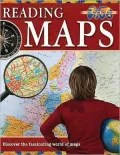
In the series, "All Over the Map," readers have learned about map parts, map types, and map drawing. The most important skill regarding maps is reading a map, because that is the one you will use most of your life. The text opens by explaining times when we need to read maps—when finding our way around a city, locating favorite foods in a store, or traveling around a large area like a country. Most maps have symbols such as a marker to identify a special landmark. Maps serve many purposes; they might be guides for amusement parks or maps of streets. Some maps may come shaped like a globe rather than flat. Maps can show land features, terrain, trails, or camping sites. You name it, and there is probably a map that will show it. A key component of maps is the legend, which explains the lines, symbols, and colors. Direction is another key component of successfully reading and understanding a map; therefore, most maps have a symbol called a compass rose, which shows the cardinal directions, with north normally pointing up. In addition, a map may show latitude and longitude, which is another way of defining direction. Scale is the final major component. It is a ratio. For example, one inch on a large scale map may equal a foot, while that same inch on a small scale map may represent a mile. Reviewer: Marilyn CourtotBook Details
Published
September 1, 2008
Publisher
Crabtree Publishing Company
Pages
32
Format
Paperback
ISBN
9780778742753