
Civilization - General & Miscellaneous, Religion - General & Miscellaneous
Available on Bookshop
Write a review
Books.org participates in affiliate programs including Bookshop.org and the Amazon Services LLC Associates Program. We may earn a commission from qualifying purchases made through links on this page, at no additional cost to you.
Log in to track your reading progress.
Overview
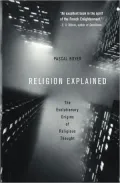
Many of our questions about religion, says renowned anthropologist Pascal Boyer, are no longer mysteries. We are beginning to know how to answer questions such as "Why do people have religion?" Using findings from anthropology, cognitive science, linguistics, and evolutionary biology, Religion Explained shows how this aspect of human consciousness is increasingly admissible to coherent, naturalistic explanation. This brilliant and controversial book gives readers the first scientific explanation for what religious feeling is really about, what it consists of, and where it comes from.Synopsis
The first classic of 21st-century anthropology."--John Tooby and Leda Cosmides, University of California, Santa Barbara
Booklist
....fascinating book.
Editorials
From Barnes & Noble
Unlike other books offering "scientific" explanations for religion, this one actually details the common strands running through spiritual concepts and feelings, rather than using science to simply explain away religion. Drawing upon the latest findings of evolutionary psychology and cognitive science, Boyer shows why religious ideas make sense to humans and just which ideas are acceptable.Washington Post Book World
...a penetrating scientific analysis of religion.Booklist
....fascinating book.Library Journal
Utilizing cross-cultural studies and a multidisciplinary approach, anthropologist Boyer (research fellow, Inst. of Cognitive Science, Lyon, France) argues that the origin, development, and diversity of religion are scientifically explainable within the naturalistic frameworks of evolutionary biology and cognitive psychology. His point of departure is the complex human brain and its mental activity, both being a result of natural selection enhancing the adaptation, survival, and reproductive success of our social ancestors through over four million years of hominid evolution. Boyer focuses on the inference systems and intuitive expectations of evolved human brain capacities in order to account for the biocultural origin of religious concepts and supernatural agents (e.g., gods, ghosts, demons, spirits, and witches). He is to be commended for his scholarly and critical examination of religion, but some readers may find his arguments difficult to follow and to accept. Nevertheless, this is a significant contribution to anthropology. Especially recommended for academic libraries. H. James Birx, Canisius Coll., Buffalo, NY Copyright 2001 Cahners Business Information.Booknews
Drawing on theories and research in evolutionary biology and cognitive psychology, Boyer (collective memory and individual memory, Washington U., St. Louis, Missouri) claims to have final answers to such questions as why religion matters so much in people's lives, why there are several religions instead of just one, why there are churches and religious institutions, and why religion persists in an age of rational thought. Annotation c. Book News, Inc., Portland, OR (booknews.com)Kirkus Reviews
A roundabout consideration of why humans turn to otherworldly thoughts. Boyer (Collective Memory and Individual Memory/Washington Univ.) is fluent in several disciplines that touch on the cognitive sciences, including physical anthropology and evolutionary psychology. All of these disciplines, along with classical philosophy, come to bear on his account of why humans in every place and at every time have found it necessary or desirable to think of gods, the afterlife, and other extraordinary matters, building "complex supernatural constructs out of very simple conceptual bricks" (such as the recognition that all mortal beings die). While recognizing that religious beliefs vary widely within and between cultures and individuals, the author suggests that we hold them largely because we can; that is, all humans possess "the mind it takes to have religion," a mind that uses processes such as "decoupling" and "inference systems" to arrive at what Boyer considers to be eminently practical reasoning about the meaning of life (reasoning that can sometimes involve inventing cosmic explanations for the mysteries and problems the mind confronts). Regrettably, the author is rarely straightforward in making such arguments, preferring instead to linger over (and then demolish) straw-man arguments and to show the flaws in other influential theories of religion (such as those of William James). The noted biologist E.O. Wilson gives a more concise and better argued account of the evolutionary basis of religion-if one that seems calculated to offend believers, as Boyer's is not-in Consilience (1998). For all that, Boyer's account has many merits, showing how the mind works by means of analogy, trial anderror, and sheer speculation (the more counterintuitive the better) in the service of helping us to become comfortable inside our own skins and sleep well at night. Students of psychology and philosophy will find much value in Boyer's treatise, but it will probably strike most general readers as dry and daunting.Book Details
Published
May 1, 2002
Publisher
Basic Books
Pages
384
Format
Paperback
ISBN
9780465006960