
Political Science - History, World History - General & Miscellaneous, Enlightenment, 18th Century American History - General & Miscellaneous, Modern Philosophy - 17th & 18th Century
Available on Bookshop
Write a review
Books.org participates in affiliate programs including Bookshop.org and the Amazon Services LLC Associates Program. We may earn a commission from qualifying purchases made through links on this page, at no additional cost to you.
Log in to track your reading progress.
Overview
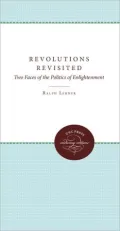
In this elegant extended essay, Ralph Lerner concentrates on the politics of enlightenment--the process by which those who sought to set minds free went about their work. Eighteenth-century revolutionaries in America and Europe, Lerner argues, found that a revolution aimed at liberating bodies and minds had somehow to be explained and defended. Lerner first investigates how the makers of revolution sought to improve their public's aspirations and chances. He pays particular attention to Benjamin Franklin, to the tone and substance of revolutionaries' appeals on both sides of the Atlantic, and to the preoccupations of first- and second-generation enlighteners among the Americans. He then unfolds the art by which later political actors, confronting the profound political, constitutional, and social divisions of their own day, drew upon and reworked their national revolutionary heritage. Lerner's examination of the speeches and writings of Edmund Burke, Abraham Lincoln, and Alexis de Tocqueville shows them to be masters of a political rhetoric once closely analyzed by Plato and his medieval student al-Farabi but now nearly forgotten.Editorials
Library Journal
Revolution ``first must be made, in institutions, thinking and expectation and then defended against overt enemies without and covert enemies within,'' writes Lerner. Through the writings of Benjamin Franklin, Edmund Burke, Abraham Lincoln, and Alexis de Tocqueville, Lerner (Univ. of Chicago) presents a ``retrospective'' study of the politics of the American and French revolutions. He chose these men because they had the clearest understanding of the crises in their respective countries. The strongest feature of this work is Lerner's examination and explanatoin of the writing of Lincoln and de Tocqueville in defense of their revolutions; the weakest is the segment on Franklin. The selections chosen from Franklin's early writings fail to prove Lerner's contention because they do not clearly show Franklin's revolutionary ideas. This work is designed for scholars in the field.-- Richard Hedlund, Ashland Community Coll., Ky.From the Publisher
"Lerner has written an extraordinary, thought-provoking book. His essays on Burke, Lincoln, and Tocqueville are as stimulating and fresh as any in recent memory."—Journal of American History"Lerner has written a thematically unified work on a genre of political and historical rhetoric hitherto unnoticed in modern scholarship. . . . The writing is crisp, the research is thorough, and the argument is both novel and arresting."—Paul A. Rahe, University of Tulsa
Book Details
Published
November 9, 2000
Publisher
Chapel Hill, N.C. : University of North Carolina Press, c1994.
Pages
152
ISBN
9780807862865