
Children - Nature, Aquatic Life & Sciences, Aquatic Life & Sciences, Ecology & Environmental Sciences, Children - Fiction & Literature, Ecology
Log in to track your reading progress.
Overview
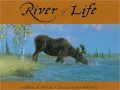
As the seasons change, a river in Alaska reveals its remarkable biodiversity. A great web of life is presented--the river and its shores sustain an astonishing variety of plants and animals. The river is home: salmon fry and rainbow trout live in it, plankton drifts in its current. The river is food: bears and bald eagles catch salmon, big fish chase little fish, tree roots absorb the river water. This evocative nonfiction picture book follows a year in the life of this Alaskan river. The lyrical text and lush paintings introduce young readers to the sights and sounds of the river and its inhabitants and are rich in details certain to fascinate ecologists of all ages.Describes a river in Alaska and the life that it supports, emphasizing how the living things around it are connected and dependent upon it for their survival.
Editorials
"The art is quite eye-catching and is nicely complemented by the poetic text."
Children's Literature
Miller, a former teacher and resident of Fairbanks, Alaska, writes natural history with the voice of a poet. "Silent ice turns to water, sending the river with a hundred voices to the sea," she writes, when she could just as easily have written, "When spring comes, the ice melts." In her lyrical text, she explains the concept of biodiversity in a way that even the very young can understand. Van Zyle, also an Alaska resident and a frequent collaborator with Miller, shows his love of the land in illustrations that catch subtleties such as the fuchsia splash of fireweed, the cracks in separating blocks of river ice, and the orangepink "alpenglow" of a winter sunset. It's a musthave for elementaryschool teachers planning units about biodiversity or the environment. 2000, Clarion Books, Ages 4 to 9, $15.00. Reviewer: Donna FreedmanSchool Library Journal
Gr 2-4-This story takes readers through a year as a child observes the flora and fauna that live in or near an Alaskan river. Oil paintings on double-page spreads show different views of the river. The bears, otters, moose, salmon, and other wild creatures are the focus of the pictures, but the youngster appears in the sidelines in many of them. The paintings are very realistic, with lots of attention paid to the detail. The perspectives vary to show the various creatures'-eye views from the ground, the air, and under the water. The art is quite eye-catching and is nicely complemented by the poetic text. A glossary lists the animals mentioned and gives a bit of information about each of them. Young children will be drawn to the attractive illustrations and simple story, and older nature lovers will appreciate the more subtle elements like the author and illustrator's obvious affection for and excitement about their subject.-Arwen Marshall, formerly at New York Public Library Copyright 2000 Cahners Business Information.|Kirkus Reviews
This portrait of life along an Alaskan river is marked by the observations of a child who notes the changes of its plants and animals as the seasons go forward. Miller and Van Zyle (Disappearing Lake, 1996) take readers far into the northern wilderness, where rivers run clean, kingfishers snap salmon from the water's surface, and hungry eagles, bears and otters come to the river to feed. Following the calendar year, spring brings melting river ice, summer awakens dragonflies, cascades of golden aspen leaves welcome fall, and curtains of snowflakes announce winter's return. Van Zyle's paintings are full of fresh air and the clean cold light of the north. Double-paged spreads on long rectangular pages give the sense of the sweep of landscape even when depicting the underground of a riverbank. Full-bleed oils give the sense that more life is right off the edges of the page. This book is similar in format to Wadsworth's Tundra Discoveries (1999), which chronicles the yearly cycle of nature in a slightly different northern clime. An ecology lesson made beautifully simple. (glossary) (Nonfiction. 5-8)Book Details
Published
March 20, 2000
Publisher
Houghton Mifflin Harcourt
Pages
32
ISBN
9780547563114