
Ancient Civilization - History, European Studies - General & Miscellaneous, Ancient Rome - Social, Cultural & Political Aspects, National Characteristics - Europe, Ancient Roman Civilization & Influence, General & Miscellaneous Ancient Roman History
Available on Bookshop
Write a review
Books.org participates in affiliate programs including Bookshop.org and the Amazon Services LLC Associates Program. We may earn a commission from qualifying purchases made through links on this page, at no additional cost to you.
Log in to track your reading progress.
Overview
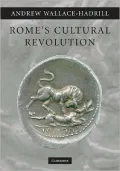
The period of Rome's imperial expansion, the late Republic and early Empire, saw transformations of its society, culture and identity. Drawing equally on archaeological and literary evidence, this book offers an original and provocative interpretation of these changes. Moving from recent debates about colonialism and cultural identity, both in the Roman world and more broadly, and challenging the traditional picture of 'Romanization' and 'Hellenization', it offers instead a model of overlapping cultural identities in dialogue with one another. It attributes a central role to cultural change in the process of redefinition of Roman identity, represented politically by the crisis of the Republican system and the establishment of the new Augustan order. Whether or not it is right to see these changes as 'revolutionary', they involve a profound transformation of Roman life and identity, one that lies at the heart of understanding the nature of the Roman Empire.Synopsis
Original interpretation of the fundamental transformations of Rome's society, culture and identity during the period of its imperial expansion.
Editorials
From the Publisher
"Among the many studies of ancient Roman history and society, this one will stand out for its scope and depth as well as its clarity and bold interpretation. [Wallace-Hadrill] (his insightful discussion of Vitruvius is superb). Students and scholars alike will find this book the standard for research and interpretation. Highly recommended. --Choice"This is a great work of synthesis, building, as all the best works of its kind, both on previous groundwork by the author and on (generously acknowledged) foundations laid by a host of other scholars...more importantly, this book is not only an assembly of evidence, however learned, but also a thoughtful engagement with that evidence." --BCMR
Book Details
Published
December 1, 2008
Publisher
Cambridge University Press
Pages
526
Format
Paperback
ISBN
9780521721608