
Short Story Collections (Single Author), Settings & Atmosphere - Fiction, African Americans - Fiction & Literature, Literary Styles & Movements - Fiction
Log in to track your reading progress.
Overview
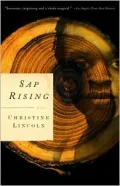
In this spare and mesmerizing debut, Christine Lincoln takes us inside the hearts and minds of African Americans whose lives unfold against a vividly evoked rural community. As they navigate between old and new, between youth and responsibility, they find themselves choosing between the comforts of what they trust without question and the fearsome excitements of what they might come to know.One young man’s world is both expanded and contracted by stories he hears from a beautiful stranger. Another stumbles across his mother having an affair with his uncle. An intense friendship forms between one woman afraid she will turn out like everyone else and one afraid she won’t. Lincoln’s down-to-earth voice, saturated with the manner and details of the South, brings her characters to life with a remarkably light touch and an extraordinary depth of emotion. In Sap Rising, she proves herself one of those writers whose work transcends its own rich particularity to speak with clarity to the most fundamental elements of the human experience.
Editorials
Publishers Weekly
Abandonment and acceptance, city versus country living, and the aching desire for freedom are the themes of the 12 linked short stories gathered here. Gently and skillfully, Lincoln leads readers back and forth in time collecting and juxtaposing fragments of stories set in a town called Grandville, in the rural South. In "Bug Juice," nine-year-old Sonny gets a taste of grown-up dreams and desires when his uncle comes to visit with a city woman "the color of ripened mulberries," who tells him stories about "Af-free-ka." Later on, in "All That's Left," Sonny appears again as one of a group of friends who decide to gang up on a prissy girl, Pontella. Pontella is the daughter of Ebbie Pinder, who runs away from Grandville and returns with baby Pontella, only to desert her three years later. When she realizes her mother isn't coming back, in "A Hook Will Sometimes Keep You," Pontella comes to believe she is turning invisible, though her Aunt Loretta loves her dearly. Lincoln's language can be trite and self-consciously folksy, and her tales fit a little too snugly in the mold of down-home Southern storytelling, but she supports their sentimental trappings with harsher truths. (Sept.) Forecast: Lincoln has already been the subject of a number of feature stories in national publications since she won a major writing prize as a graduating senior and 34-year-old single mother at Washington College in Maryland. A 12-city author tour and national print advertising are supporting this title, but it may fall between the cracks, being too literary for readers of commercial African-American fiction and too soft focus to succeed as literary fiction. Copyright 2001 Cahners Business Information.KLIATT
In many of these stories, young Southern blacks learn about the world from outsiders, and their understanding and values, which had been formed by their parents, widen and darken. An overheard conversation at a funeral, an uncle's girlfriend's pointed comments, a visitor's kindly advice—all are moments of insight for the young protagonists. Set mostly in the rural South decades ago, the stories have an elegiac tone because of their distance in time, but the lessons learned are hurtful and hurry the children into the world of adults. A few of the stories, including the title piece, are mere sketches, character studies with little action, but the three stories that recount the death and funeral of Hiron Fuller, scattered in reverse chronological sequence through the book, offer more. A character we first see as a drunken, wife-beating clown is revealed as a tortured man unable to reach the promise of his youth because of the pervasive racism in post-WW II America. The author does not ask us to condone this man's weaknesses but to feel his frustrating, pointless suffering. While the focus of the first story is the response of his three daughters to his death, by the end of the third story we are deep inside Hiron's consciousness and see there the tragedy of his life. Technically and emotionally, the Hiron Fuller stories are the highlight of this excellent collection. KLIATT Codes: JSA—Recommended for junior and senior high school students, advanced students, and adults. 2001, Random House, Vintage, 164p., HealyLibrary Journal
a life other than what her community expects of her, a rerun of her parents' life. Thinking about her father, "She knew that he had risen early in the morning and would stay in the fields all day .And come home in his sweat-soiled work clothes .Ebbie hated that smell." In "Acorn Pipes," Hiron, a husband and father, has bled to death from the blow of his own ax: " `I hear a tree fell on him.' `Naw, chile. He was drunk. As usual.' " Hiron is thus dismissed as shameless. Later, "A Very Close Conspiracy" reveals the unmaking of this man. Home from a war in which he was denied a respectable participation, he is forced off the bus and made to enter by the rear entrance. "He felt something deep inside begin to shrink with each step toward the back of the bus .He wanted to disappear .And Hiron knew in that instant what it felt like to exist and not exist." The knowledge with which Lincoln writes is too much for any one person to harbor. Highly recommended. [Previewed in Prepub Alert, LJ 5/15/01.] Patricia Gulian, South Portland, ME Copyright 2001 Cahners Business Information.School Library Journal
Adult/High School-This short-story collection has YA appeal beyond its slim format and eye-pleasing font. Grandville is the setting of each selection, but the picturesque, rural environs take a backseat to the town's feisty residents. Before "African American" or "politically correct" was part of the nation's vernacular, this close-knit community of "people of color" was coping with traditions, expectations, and inner voices. Readers hear from Sonny, Scoogie, June, Cinny, Hiron, Pontella, Ebbie, Ruthie, and a cast of others as they wend their way through a series of personal trials. An overlap of characters among stories forges a quaintness that is reinforced by appropriate dialect from children (chirrun) and grown-ups alike. Out of chronological order, the lives of Grandville's most vociferous citizens are patched together. What rises to the top is a railing against stereotypes and familial domination that teens will find respectable and worth discussing. Sap Rising would enliven discussions about African Americans, feminism, or self-esteem. It is a quick read, but one to savor.-Karen Sokol, Fairfax County Public Schools, VA Copyright 2001 Cahners Business Information.Kirkus Reviews
Oprah protegee Lincoln offers a debut collection of 12 folksy tales delicately and graciously delineating the hardscrabble lives of a series of southern rural characters. Many of these stories, gripped by subtle violence, concern various members of the Fuller family: Ma'D, once a vivacious young bride, her dreams gradually blunted by the harsh reality of farm life; her husband Hiron Fuller, a WWII vet so demoralized by racism that he returns to the farm an alcoholic failure; and their four daughters. In "Acorn Pipes," Hiron's sudden, gruesome accidental death by axe prompts second-oldest daughter Hira to fabricate for the benefit of her incredulous sisters a tall tale about their father teaching her to make acorn pipes. The sisters are desperate to believe that their daddy was more than just a drunken fool, and they hide under the porch, splintering acorns in their hands, as they listen to the neighbors' malevolent gossip overhead. In "A Very Close Conspiracy," on the other hand, Hiron relates the affecting details of his own story to his mule, Walter P, on the last fateful day of his life. Oldest daughter Cinny figures in several of the tales as the strongest-willed of the sisters, defying her mother even when they come to blows. In "Wishes," she dares to pray that her no-good father (Cinny "knew all the secrets of a grown man's frailties") will die and leave them all in peace. Other stories, such as "Bug Juice" and "Winter's Wheat," sketch entire family tragedies within a few vivid observations by the child narrator; they point up Lincoln's debt to such African-American writers as Toni Morrison and to oral history. The slenderness of the narratives belies their emotional strength,revealing the author's deep conviction that the writing process itself can redeem the poverty, ignorance, cruelty in her characters' lives. Author tourBook Details
Published
September 1, 2002
Publisher
Vintage Books USA
Pages
176
Format
Paperback
ISBN
9780375727771