
Blue Collar Workers - Biography, Latin America & the Caribbean - Travel Essays & Descriptions - General & Miscellaneous, Great Adventures & Legendary Journeys - Travel Essays & Descriptions, South America - General & Miscellaneous - Travel
Log in to track your reading progress.
Overview
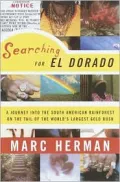
"The search for the lost City of Gold in the Amazon basin has inspired adventurers since the days of the Spanish conquistadors and Sir Walter Raleigh. Intrigued by the cultural, economic, and environmental fallout of a five-hundred-year gold rush, journalist Marc Herman traveled to the rainforests of Guyana, where he joined up with a rowdy crew of local gold miners as they pursued their dreams of riches." In an adventure-filled narrative rich with humor and empathy, Herman brings to life the group of miners. They are independent prospectors who wear all their earnings on their fingers and around their necks - their bank accounts are oversized rings and huge gold necklaces. But yards away from the mines where these men seek their fortunes with techniques reminiscent of California's forty-niners - dynamite, tin pans, and wooden sluices - there are mines run by international corporations that fail to alleviate the area's poverty despite their tremendous technological and political power.Editorials
Publishers Weekly
Herman's enthralling report juxtaposes the myth of El Dorado (a hidden city of gold) with the present-day reality of gold hounds scrambling for every extractable gleaming ounce. While Spanish conquistadors may have envisioned heaps of gold ready for the picking, the enormous deposits that started a rush in the 1980s along the Guyana-Venezuela border aren't so exciting: digging them out is fantastically expensive, not to mention messy. Herman goes to a huge mine near Omai, Guyana, with the potential to produce a billion dollars in gold, but learns that "El Dorado, in the end, was real, had been discovered, and was a pile of dirt." He uses the Omai project to portray a common plight faced by an impoverished country blessed with vast natural resources: unable to develop its own riches, the country enters into deals with international companies that simultaneously benefit and exploit. In this case, Guyana allowed a Denver firm to build a $260 million operation with 95% of the proceeds going to outsiders. The operation, which began in 1993, accounted for about a fifth of Guyana's national income, but came at a cost. Millions of gallons of cyanide-rich toxic waste spilled into a nearby river; the surrounding forest was razed; and devastating diseases spread into the once-pristine area. Herman laments these effects, but a Guyanese miner reminds him, "Look what happened in the United States. You cut down all them forests, do the mining... that's what make you rich. This country want to be rich too." Illuminating the complex intersection of economic development, Third World politics, ecology and culture, Herman's lively book will mesmerize armchair travelers and ecology-minded readers. Agent, Jill Grinberg. (Feb.) Copyright 2002 Cahners Business Information.KLIATT
Guyana is a strange place, a country of gold mines and poverty, of impoverished people wearing diamond rings. Marc Herman, a young man looking for adventure, becomes a journalist by saying he is one, and finds himself in Guyana, trying to understand gold mining. He looks at all aspects: the lives of gold miners and owners of gold mines; the environmental and economic aspects of mining for gold; and the seemingly everlasting mythology connected to gold. He concludes his book with a look at his sources of information about Guyana, finance, geology, cyanide use, environmental politics and other related issues. Some of the book reads like an exposé of financial misconduct, other parts like a Charles Dickens novel filled with weird characters. Overall, this is a fascinating look at a largely unknown part of the world. KLIATT Codes: SA—Recommended for senior high school students, advanced students, and adults. 2003, Random House, Vintage, 253p. illus. map., Ages 15 to adult.—Nola Theiss
Library Journal
This is as much an exploration of capitalism as it is of the culture and geography of Guyana and Venezuela. Sure, Herman camps alongside Guyanese gold miners and treks through nearly uncharted rain forest, but the promise and disappointment of gold and wealth and of "America" itself seep from the pages as easily as the deadly mercury used in the mines seeps into the South American water table. Herman, who has written for Harper's and Spin, among others, has created a telling narrative that covers mining techniques, border disputes, environmental activism, and global economics without sacrificing the hard facts in front of him: El Dorado is a place where residents ride for hours on unpaved roads and work alongside cyanide lakes while anxiously searching for their chance to get rich. Unfortunately, they seem doomed to poverty. Recommended for public libraries and all travel collections and environmental collections.-Mari Flynn, Keystone Coll., La Plume, PA Copyright 2003 Cahners Business Information.Kirkus Reviews
A crisply rendered account of "gold fever" in the southern Guyanese rainforest, attuned to the marginalized minor players on the ground. In refreshingly straightforward prose, freelance journalist Herman explains why he was repeatedly drawn to the same hardscrabble South American region that once bewitched Spanish invaders: "El Dorado was surrounded by gold and diamonds [but] it was not a place easily associated with abundance or riches." Herman effectively depicts two distinct, competing forms of gold mining. Determined and impoverished individual miners band together to work small, independent claims reminiscent of 19th-century prospecting; they excavate mud with crude pumps and hoses, then treat it with mercury, causing minute quantities of gold to solidify (and creating numerous patches of denuded rainforest and waste mud). These hazardous grassroots operations are overshadowed by internationally financed industrial mines, "enormous factories producing gold with advanced geology and chemistry and millions in heavy equipment." Favored by the Guyanese government, such operations are bedeviled by the pitfalls of global trade. The Omai mine, for example, became notorious for a massive cyanide spill and despite its large production capacity is unlikely to become profitable due to fluctuations in the world gold market. Herman shrewdly addresses this paradoxical situation, noting that the gold industry’s 1990s campaign to make gold ornamentation ubiquitous actually devalued it as currency. Also, gold-mining stock shenanigans (particularly the huge Bre-X fraud) crippled the industry’s reputation among venture capitalists, which almost ensures that much of Guyana’s mineral wealth will remainburied. The author’s laid-back style and youthfully curious perspective help him capture minor moments of surprising gravity, as when he visits a backroom jewelry factory where local gold is diluted and made into rings that serve as the miners’ bank accounts. Elsewhere, his natural empathy results in solid and affecting portraiture of the Guyanese people; in a remote settlement, he observes that the wildcat miners’ meager profits are evidently invested in their well-clothed, healthy schoolchildren. Sensitive, thought-provoking travel narrative.Book Details
Published
February 1, 2003
Publisher
New York : N.A. Talese/Doubleday, 2003.
Pages
272
Format
Hardcover
ISBN
9780385502528