
Literary Criticism - General & Miscellaneous, English Drama - General & Miscellaneous - Literary Criticism, English Drama - 16th-17th Century - Elizabethan & Jacobean Eras - Shakespeare - Literary Criticism, Society & Culture in Literature, Upper Class
Available on Bookshop
Write a review
Books.org participates in affiliate programs including Bookshop.org and the Amazon Services LLC Associates Program. We may earn a commission from qualifying purchases made through links on this page, at no additional cost to you.
Log in to track your reading progress.
Overview
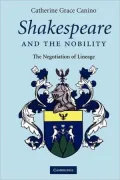
Shakespeare and the Nobility examines, for the first time, how Shakespeare was influenced by the descendants of the aristocratic characters in his early history plays. The Henry VI trilogy and Richard III are among the first plays in the English dramaturgy that reflect the lives and activities of the ancestors of sixteenth-century aristocrats. In a time when the upper classes of England were obsessed with family lineage and reputation, the salient question is how William Shakespeare, a socially inferior playwright and actor, handled the delicate matter of portraying the complex and often unattractive ancestors of the most powerful people of his day. In answer to this question, this study examines the lives of the historical figures and their descendants, and argues that Shakespeare consistently modified his portrayal of the ancestors with their descendants in mind. In addition to providing a historical glimpse into the romance, intrigue, and politics of the Renaissance aristocracy, this book also presents fresh readings of the early histories, with new sidelights on characters too often dismissed as an unsavory lot.Synopsis
Shakespeare and the Nobility examines how Shakespeare was influenced by the descendants of the aristocratic characters in his early history plays. The Henry VI trilogy and Richard III are among the first plays in the English dramaturgy that reflect the lives and activities of the ancestors of sixteenth-century aristocrats. In a time when the upper classes of England were obsessed with family lineage and reputation, the salient question is how William Shakespeare, a socially inferior playwright and actor, handled the delicate matter of portraying the complex and often unattractive ancestors of the most powerful people of his day. In answer to this question, this study examines the lives of the historical figures and their descendants, presenting fresh readings of the early histories, and argues that Shakespeare consistently modified his portrayal of the ancestors with their descendants in mind.Book Details
Published
July 26, 2012
Publisher
Cambridge University Press
Pages
278
Format
Paperback
ISBN
9781107405905