
Economic Conditions in Asia, Gender & the Law, Asian Studies - South Asia - India, Sex Role - Asia, Women's Rights, Women - Asia, Women & Religion, Doctrine - Hinduism, Women's Studies - General & Miscellaneous
Log in to track your reading progress.
Overview
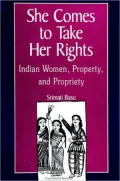
Examines the contemporary workings of property law in India through the lives and thoughts of middle-class and poor women.Synopsis
Using the contemporary workings of property law in India through the lives and thoughts of middle-class and poor women, this is a study of the ways in which cultural practices, and particularly notions of gender ideology, guide the workings of law. It urges a close reading of decisions by women that appear to be contrary to material interests and that reinforce patriarchal ideologies.Hailed as a radical moment for gender equality, the Hindu Succession Act was passed in India in 1956 theoretically giving Hindu women the right to equal inheritance of their parents' self-acquired property. However, in the years since the act's existence, its provisions have scarcely been utilized. Using interview data drawn from middle-class and poor neighborhoods in Delhi, this book explores the complexity of women's decisions with regard to family property in this context. The book shows that it is not passivity, ignorance of the law, naiveté about wealth, or unthinking adherence to gender prescriptions that guides women's decisions, but rather an intricate negotiation of kinship and an optimization of socioeconomic and emotional needs. An examination of recent legal cases also reveals that the formal legal realm can be hospitable to women's rights-based claims, but judgments are still coded in terms of customary provisions despite legal criteria to the contrary.
Book Details
Published
September 30, 2009
Publisher
State University of New York Press
Pages
305
ISBN
9780791495926