
Literary Criticism - General & Miscellaneous, British Authors - 20th Century - Literary Biography, Relationships - Friendship, Latin American & Caribbean Literary Biography, U.S. Authors - 20th Century - Literary Biography
Log in to track your reading progress.
Overview
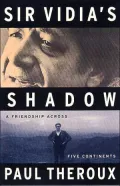
From the bestselling author of My Other Life and Kowloon Tong, the fascinating memoir of a friendship and mentorship that spanned 30 years and five continents. In this intimate portrait of his closest friendship, Paul Theroux chronicles his life as a writer from the beginning, when he was introduced to the literary world by the acclaimed writer V.S. Naipaul. He first met Naipaul in Africa in 1966, when Theroux was 23 and Naipaul 34. Later knighted by Queen Elizabeth and often cited as a contender for the Nobel Prize, Naipaul was close to no one except his first and second wives and Theroux himself. Vidia, as he was known, was the first to read and champion Theroux's earliest efforts. The two writers shared time in a country hotel in Kenya, traveled through Rwanda, and corresponded regularly when Naipaul lived in London and Theroux in Singapore. They witnessed each other's successes and failures and became each other's editors, confidants, and teachers.Built around exotic landscapes, anecdotes that are revealing, strange, humorous, and melancholy, and 30 years of mutual history, this is a very personal account of how one develops as a writer, how a friendship waxes and wanes between two men who have set themselves on the perilous journey of a writing life, and what constitutes the relationship for mentor and student. Told with Theroux's impeccable eye for place and setting and his novelistic instinct for character and incident, Sir Vidia's Shadow recalls Nicholson Baker's U and I: A True Story and Rainer Maria Rilke's classic Letters to a Young Poet.
Editorials
Boston Globe
A compact, provocative gem of a novel.David Nicholson
Vigorous and evocative. . . The kind of story you force yourself to savor slowly though you're dying to find out what happens next. -- Washington Post Book WorldDavid Pryce-Jones
Sir Vidia's Shadow is a memoir which is an explosion of resentment....Anyone in search of a good or even entertaining row will not find it. There is no subject here. -- Literary ReviewJames Bowman
. . .[W]riting this book. . . .was a bad decision, at least from a literary point of view. . . . Therous is not 'liberated' but cast into the intellectual prison of his own bitterness and hurt feelings, and an otherwise promising 'subject' is spoiled as a result. —National ReviewRichard Eder
Exhilarating. . . A complex fabric, a tapestry. . . depicting the rich companionship of two difficult men. -- Los Angeles Times Book ReviewTimes Literary Supplement
Both unputdownable and utterly engaging.Washington Post
Vigorous and evocative . . . the kind of story you force yourself to savor slowly though you're dying to find out what happens next.From The Critics
30 years ago in Uganda, before Theroux had written his first novel, he was a teacher of English at a sleepy university, where in the common room, "all the lecturers and staff sat in shorts and knee socks like a lot of big boys, yakking," and where in his off hours he had incessant tropical sex with a stately, insatiable Nigerian woman. Into this second-rate paradise dropped-like a live coal onto damp kindling-the already established but not widely read novelist V.S. Naipaul, a man as bitter as a coffee bean.One can see why Theroux, a traveler who savors the world's oddities, was invigorated by Naipaul's high standards but unphased by his rudeness, and why the older man, accustomed to being babied despite his lack of means, found Theroux an eager, intelligent companion. In this tiresome, tell-all memoir, Theroux writes of how Naipaul encouraged his writing and made use of his services. Throughout their subsequent rise to the ranks of the literary great and terrible, the two men met and corresponded, always keeping their relative status. Naipaul was the anguished priest of literature, maintaining a style of such austerity that it resembles dry ice-all curling smoke and burning substance at first glance, but evanescing to nothing, leaving no sense of connection or shared feeling in retrospect. Theroux was respectful, but like an altar boy in relation to his priest, living his real life beyond the great man's view.
Theroux normally presents a likable façade, but here he descends to sly nastiness. He recounts incident after incident of Naipaul's cruelty, bullying, fussiness and pettiness. The reader has no trouble crediting the examples Theroux gives: thevegetarian Naipaul spurning the vegetables prepared by a hostess because they were for the entire dinner party and not solely for him; Naipaul bullying a kind woman who got up before dawn to drive him to the Seattle airport. But in recounting these instances obsessively, Theroux becomes far less likable himself. The best one can say about the relationship between Theroux and Naipaul is that it involved posing and self-deception on both sides. And, if there is a lesson to be learned here, it is probably the one imparted by a frightened little maidservant in Joseph Conrad's Under Western Eyes: "Great men," she whispers, "are terrible."
-Penelope Mesic
Publishers Weekly
The subject of considerable attention well ahead of its publication date (which the publisher has now moved up), this frank and revealing study of two writers, longtime friends and mutual supporters, who finally come to a decisive parting of the ways, is sometimes sad, often funny and occasionally touching. Such is Theroux's apparently effortless recall of conversations, scenes and currents of feeling that it reads more like a novel with a particularly vivid central character than a memoir. That central character is of course the novelist V.S. Naipaul, seen here as brilliant, eccentric, irascible, often, it seems, purposefully outrageous. The two met in Africa in 1966 when Theroux was just beginning as a writer and Naipaul was already an acknowledged star. Theroux, who portrays himself as much more accommodating than Naipaul, puts himself in the background, delighted with each crumb of approbation from the master. There were many things Theroux found odd about his friend: his snobbishness, his apparent racism, his selfish willingness to let other people take care of his every need. (He recalls one especially costly meal with Naipaul, for which he paid, as usual, that left him without the fare home.) But it seems to have been Pat, Naipaul's long-suffering English wife, who finally came between them; Theroux, who confesses to having once pondered an affair with her, remained always an admirer of her decent stoicism, and wrote a touching tribute on her death. This was then seized upon by Naipaul's hastily married second wife (a Pakistani newspaper columnist who would seem, in her bumptiousness and careless writing, the antithesis of everything Naipaul cherished) to create a rift with Theroux. A last chance meeting in the street produced Naipaul's memorable line "Take it on the chin and move on," and the indefatigable Theroux had himself the theme for this vastly readable book. Is it fair to Sir Vidia? Impossible to be sure, but it is an enthralling examination of a seldom-treated subject, a thorny literary friendship. First serial to the New Yorker; author tour. (Oct.)From The Critics
"Both unputdownable and utterly engaging."Library Journal
Noted travel writer/novelist on best friend V.S. Naipaul.James Bowman
. . .[W]riting this book. . . .was a bad decision, at least from a literary point of view. . . . Therous is not 'liberated' but cast into the intellectual prison of his own bitterness and hurt feelings, and an otherwise promising 'subject' is spoiled as a result. -- National ReviewMichiko Kakutani
. . .Shadow gradually devolves into an angry rant that drops all pretence of trying to create a fair or nuanced portrait of Mr. Naipaul. . . .Mr. Theroux demonstrates almost as few scruples as Linda Tripp in regaling the reader with voyeuristic tidbits about Mr. Naipul's life. . . .Shadow may start off as a memoir, but it ends up as an angry, prosecutorial indictment. -- The New York TimesSarah Kerr
. . .[T]he tale comes to us as one half of a real life cat fight. . . .All {Theroux has] done is write a memoir that feels less like a memoir than an onslaught of sticks and stones. -- The New York Times Book ReviewKirkus Reviews
The detailed story of a long, top-heavy friendship that took a sudden nosedive, from novelist and travel writer Theroux (Kowloon Tong, 1997).Book Details
Published
January 18, 1999
Publisher
Boston : Houghton Mifflin, 1998.
Pages
358
Format
Hardcover
ISBN
9780395907283