
Marine Life - General & Miscellaneous, Fisheries & Aquaculture, Marine Animals - General & Miscellaneous
Log in to track your reading progress.
Editorials
Children's Literature
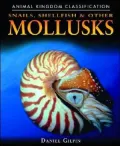
With apologies to the original quote, the world is so full of a number of mollusks, I'm sure we should find them fascinating--all of us! From common garden slugs to creatures we can only imagine (like the giant squid), mollusks number over 100,000 known species. How is one volume going to contain enough information and photo illustrations to grasp the wonder and variety of this phylum? This book does, very well, indeed, with exquisite illustrations. Text includes finely written information on types of mollusks, anatomy, habitats, prehistoric ancestors, mollusk senses, locomotion, hunting and feeding behaviors, and reproduction. Chapters focus on species of mollusks: slugs and snails, from pesky garden slugs to the enchantingly beautiful nudibranch and the violet sea snail, which floats on a raft of bubbles in order to attack the powerful Portuguese man-of-war; marine gastropods, like the conch, abalone, or limpet; bivalves, such as oysters, mussels, and clams; cephalopods, such as octopus and nautilus; squid and cuttlefish; and other mollusks, such as chiton, murex, and shipworms that dwell in and eat on submerged wooden ships. No book about mollusks is complete without mention of the giants--giant clam, giant Pacific octopus, the "one-foot wonder," the giant African snail whose shell can be eight inches long. The final chapter features mollusk-humankind interaction: the mollusks we love to eat, the pearls we love to wear, and useful cuttlebones that we give pet birds. The book, part of the "Animal Kingdom Classification" series, includes a classification chart, further resources, a glossary, and an index. 2006, Capstone/Compass Point Books, Ages 9 to 12.—Judy Crowder
School Library Journal
Gr 4-6-Dozens of invertebrates with fantastic shapes and bizarre behaviors are featured in these broad surveys. Concise paragraphs of text, buttressed (in most sections) by multiple color photographs, identify the major groups to which the subject animals belong and describe their physical and behavioral characteristics. The books also touch on their natural habitats, diets and feeding habits, defense mechanisms, reproductive methods, and the development of young. Anywhere from one to nine sharp color photographs of representative species complement the texts; most have extended captions that describe distinctive characteristics. Also included are diagrams of major body parts and internal organs and a simple classification chart. All three titles have smoothly written, well-organized texts and a wider scope than most introductions to the subjects. For instance, Gilpin surveys all seven classes of mollusks, while other books aimed at this audience typically focus on the more familiar classes, such as gastropods (slugs and snails) or cephalopods (cuttlefish, squids, and octopuses). And, while Sally Morgan's Sponges and Other Minor Phyla (Raintree, 2004) covers similar material and offers a bit more detail on the classification of some of the same simple animals, the Parker titles describe-and depict-a greater number and variety of invertebrate phyla. With their succinct texts and colorful formats, all three volumes will appeal to students and browsers alike.-Karey Wehner, formerly at San Francisco Public Library Copyright 2006 Reed Business Information.Book Details
Published
January 1, 2006
Publisher
Coughlan Publishing
Pages
24
Format
Hardcover
ISBN
9780756516130