
Globalization
Available on Bookshop
Write a review
Books.org participates in affiliate programs including Bookshop.org and the Amazon Services LLC Associates Program. We may earn a commission from qualifying purchases made through links on this page, at no additional cost to you.
Log in to track your reading progress.
Overview
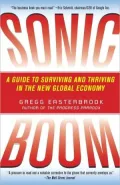
What can a spell-checker tell you about economic trends? Why is the world’s supply of ideas about to double? What did America get right in the nineteenth century that it’s getting wrong in the twenty-first? If Karl Marx were alive today, would he be hosting a show on Fox News?These are just a few of the provocative questions asked by Sonic Boom, a (mainly) optimistic look at the near future. Sonic Boom tells why the world’s economy is likely to be just fine, with prosperity increasing; why globalization will soon drive us even crazier than it does today; why “a chaotic, raucous, unpredictable, stress-inducing, free, prosperous, well-informed, and smart future is coming.” The book is rich with specific examples and advice on how to navigate your own way through the craziness that’s ahead. Forbes calls Gregg Easterbrook “the best writer on complex topics in the United States,” and Sonic Boom will show you why.
Editorials
Kirkus Reviews
Global prosperity is just around the corner, says Atlantic Monthly and New Republic contributing editor Easterbrook (The Progress Paradox: How Life Gets Better While People Feel Worse, 2003, etc.) in this upbeat view of the coming benefits of globalization. The immediate economic outlook may seem gloomy, he writes, but history shows that whenever a trend like the rising prosperity of the past three decades is interrupted, the trend resumes. In this readable but slight, repetitive book, Easterbrook maintains that globalization has just gotten under way and will usher in a "hectic, high-tech, interconnected world" where most nations will enjoy the free-market advantages of the West. Most people's lives will be better, but the tremendous pressures of constant change will foster stress, anxiety and dissatisfaction. The author offers striking examples of globalization at work: the extraordinarily busy young port of Shenzhen, China; the burgeoning high-tech zone of the former factory town Waltham, Mass., and a Chinese home-appliance manufacturer's opening of its North American headquarters in sleepy Camden, S.C. Now notable, such outcomes will become commonplace, he writes, as global forces advance the spread of economic growth, a global middle class, free economics, democracy, technical progress, education, urbanization and entrepreneurialism. As it moves from the Factory Age to "a Sonic Boom era dominated by desk jobs and education," the world will provide higher-quality, less-expensive goods for all, as well as more competition and economic turmoil, compounded by the effects of climate change. There will also be more inequality of wealth as ideas become more valuable than labor andresources. While his prognostications are provocative, Easterbrook devotes much of the narrative to making familiar observations on the increasing stressfulness of modern life, the importance of education and ideas in an information-driven society and the need to be prepared for frequent job changes and hybrid careers. He also uses too many annoying cutesy terms, such as "Super Bowl of stress."A disappointing update on globalization that nonetheless offers hope for the recession-mired. Local author promotion in Washington, D.C. Agent: Michelle Tessler/Carlisle & CompanyBook Details
Published
December 29, 2009
Publisher
Random House Publishing Group
ISBN
9781588369031