
Music - Social and Political Aspects, Popular Music - General & Miscellaneous, African Americans - General & Miscellaneous, African American Music, Popular Culture - United States, American Music - General & Miscellaneous
Log in to track your reading progress.
Overview
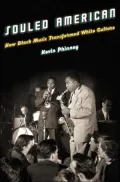
From Jim Crow to Eminem, white culture has been transformed by black music. To be so influenced by the boundless imagination of a race brought to America in chains sets up a fascinating irony, and Souled American, an ambitious and comprehensive look at race relations as seen through the prism of music, examines that irony fearlessly—with illuminating results. Tracing a direct line from plantation field hollers to gangsta rap, author Kevin Phinney explains how blacks and whites exist in a constant tug-of-war as they create, re-create, and claim each phase of popular music.Meticulously researched, the book includes dozens of exclusive celebrity interviews that reveal the day-to-day struggles and triumphs of sharing the limelight. Unique, intriguing,
Souled American should be required reading for every American interested in music, in history,
or in healing our country’s troubled race relations.
• Combines social history and pop culture to reveal how jazz, blues, soul, country,
and hip-hop have developed
• Includes interviews with Ray Charles,
Willie Nelson, B. B. King, David Byrne,
Sly Stone, Donna Summer, Bonnie Raitt,
and dozens more
• Confronts questions of race and finds meaningful answers
• Ideal for Black History Month
Editorials
Publishers Weekly
Texas journalist Phinney's first book traces the history of race relations as seen through commingling musical crossovers and a parade of personalities: from Al Jolson to Louis Jordan, Billie Holiday to Bonnie Raitt, Zip Coon to Pat Boone. This comprehensive coverage spans all genres, including blues, country, gospel, jazz, R&B, ragtime, rock and rap. With blackface minstrelsy, "whites opened a portal to their own hidden creative impulses," and Phinney explores this theme as he covers "white men in transparent blackface" (Eminem), "multi-culti chanteuses" (Mariah Carey) and "sepia Sinatras" (Johnny Mathis). Anecdotes abound, and many music history milestones punctuate Phinney's probing critical commentary. Analyzing Nat King Cole's singing style and how it made him "one of the first modern artists to `cross over' from black to white popularity," Phinney recounts how Cole, only months before the premiere of his 1956-1957 NBC television show, was assaulted onstage in Birmingham, Ala., by five white men. Phinney writes with verve and vitality, articulately charting hundreds of black and white intersections in this definitive roadmap to racial rhythms. 45 b&w photos. (Sept.) Copyright 2005 Reed Business Information.Kirkus Reviews
A near-encyclopedic study of black influence on American music. Musicians have always borrowed from their forebears, and white musicians have borrowed a hell of a lot from blacks. Not surprisingly, journalist Phinney suggests that this practice reflects institutionalized racism: "more often than not, blacks innovate/create and whites popularize/exploit until, finally, the trend breaks through to mass acceptance." Well, purists may note, blacks borrowed scales from Gypsy and Jewish music for the blues; true, says Phinney, each generation builds upon others, just as Cream invested Skip James's "I'm So Glad" with its own nuance. Yet no one would deny that blacks have been left wanting-in terms of both credit and remuneration-in their contribution to the evolution of music. The author convincingly writes that it was the introduction of rhythm into a once melody-dominated discipline that rests as one of the most significant contributions of blacks to the field. Beginning with ragtime, "rhythm has been gaining ground against melody in popular music until even the most vapid music reaches for a percussive flourish to make it danceable, convey urgency, or create drama." Phinney sharply chronicles a number of musical awakenings: from Billie Holiday to Frank Sinatra to Nat King Cole; Elvis amplifying the blackness, Pat Boone bleaching Little Richard white. A breathtaking amount of material is covered here: the ramifications of ragtime's unusual syncopation, the simple elasticity of the blues, Benny Goodman leaning on Fletcher Henderson, the female trailblazers of rap. And there are plenty of delicious anecdotes, such as the time Stevie Ray Vaughan asked musical idol Albert King to repay the moneyVaughan had loaned him. King responded: "Money? Money? Come on now, son. You know you owe me, don't you?" Rip-off artists abound, but others testified to their indebtedness, including the Beatles, the Stones and, for sure, Stevie Ray Vaughan, who never got his money and agreed that that was just fine. Not always pretty, but stirring nonetheless. (45 b&w photos)Book Details
Published
August 1, 2005
Publisher
New York, NY : Billboard Books, 2005.
Pages
352
Format
Hardcover
ISBN
9780823084043