
Asian Literature Anthologies, Literature Anthologies - General & Miscellaneous
Log in to track your reading progress.
Overview
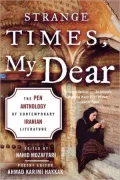
A rich and varied collection of contemporary short stories, extracts from novels, and poetry that showcases the latest developments in Iranian literature.
Editorials
Library Journal
This collection of short stories and poetry by Iranian writers highlights literary contributions from this culturally rich part of the world. An engaging but also disturbing picture of dangerous times in Iran during the late 1970s and 1980s, the book tackles controversial issues, ranging from religious freedom to misogyny to revolution to the oil trade. As compelling as their stories, the writers are an eclectic mix: a good balance of male and female, including various scholars, a former judge, a filmmaker, political activists, and artists. Among them are Hushing Golshirir ("The Victory Chronicle of the Magi"), imprisoned because one of his novels was perceived to be critical of the Shah of Iran. Moniru Ravanipur's unsettling "Satan's Stones" reminds the reader of the cost of pursuing purity. Ravanipur gently reminds the reader that such acts remain very much a part of cultures around the world. Literature from this region of the world is hard to come by, and this collection of prose and poetry is both timely and well written. Recommended for academic and public libraries, as it will add diversity to any collection.-Valeda F. Dent, Hunter Coll., New York Copyright 2005 Reed Business Information.Kirkus Reviews
"They smell your breath lest you have said 'I love you.' "For many reasons, world audiences have had little opportunity to examine the work of Iranian poets, novelists, essayists and playwrights since the 1979 revolution. For one, writers under the Islamic theocracy are closely monitored; while, strangely, filmmakers have been able to introduce all manner of metaphor and allegory into their work, the censors parse literary work much more exactly, even if some surprising bits of subversion sneak through. For another, competent translations have been few. And for yet another, since they're denied opportunities for cultural exchange, Iranian writers have been kept apart from world literary trends. The work contained in this ambitious anthology tends, in that regard, to a certain flat realism, almost reportage. (An exception is the exiled writer Shahrnush Parsipur, whom editor Mozaffari calls "a proponent of an Iranian magical realism.") And there are plenty of real matters to record: Hushang Golshiri's memorable story "The Victory Chronicle of the Magi," for instance, touches on religious repression, public executions, corruption and resistance in the space of a few pages. ("Revolution?" one of his characters remarks. "This is more like vomiting one's guts. Like taking a knife and sticking it into your own belly, then pulling out your innards and crying out, 'Come and see.' ") Similarly, Mahmud Dowlatabadi's evocative story "The Mirror," in which a man seeks to replace a long-lost identity card and sheds the last of his own identity in the process, is an unveiled piece of political criticism, though foremost a work of art. The fine poet Ahmad Shamlu, from whose work the collection takes itstitle, writes, "The man who knocks at your door in the noon of the night / has come to kill the light. / Let's hide light in the larder." It seems remarkable that these writers have escaped the wrath of the authorities, given their candor. A diverse sampling of contemporary Iranian letters, and a welcome tool for anyone seeking to understand a complex culture that has long been explained away as The Enemy. First printing of 30,000Book Details
Published
April 1, 2006
Publisher
Skyhorse Publishing
Pages
496
Format
Paperback
ISBN
9781611452327