
Technology - Reference, Electronics - Circuits - General
Log in to track your reading progress.
Overview
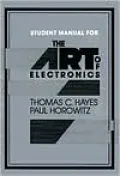
This manual is both a guide and aid to users of The Art of Electronics. It is carefully organized to follow the chapters of the main text, providing extra explanatory notes, worked examples, solutions to selected exercises and laboratory exercises. Learning aids such as glossaries, reading assignments, objectives, data sheets and summaries are also included. The manual is a product of many years' teaching at Harvard University, which has given the authors direct knowledge of concepts that students find difficult. The extra explanatory detail makes this manual an essential purchase for students using The Art of Electronics.Synopsis
This manual provides a set of course materials tailored to students' needs, moving quickly where appropriate and slowly on more difficult concepts.
Booknews
Twenty-three laboratory exercises form the backbone of a course in electronics, both analog and digital, covering: transistors, bipolar and field effect; feedback operational amplifiers; active filters and oscillators; voltage regulators and power circuits; microcomputers and microprocessors. Annotation c. Book News, Inc., Portland, OR (booknews.com)
Editorials
Booknews
Twenty-three laboratory exercises form the backbone of a course in electronics, both analog and digital, covering: transistors, bipolar and field effect; feedback operational amplifiers; active filters and oscillators; voltage regulators and power circuits; microcomputers and microprocessors. Annotation c. Book News, Inc., Portland, OR (booknews.com)Book Details
Published
September 1, 1989
Publisher
Cambridge University Press
Pages
620
Format
Paperback
ISBN
9780521377096