
Asia - Peoples & Places, Regional Biography, Authors - Biography
Log in to track your reading progress.
Editorials
Publishers Weekly
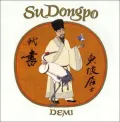
The subject of Demi's latest picture-book biography, Su Dongpo: Chinese Genius, was alive during the Song dynasty, at about the same time as William the Conqueror. Remembered now as a poet, Su Dongpo was better known in his own time as a statesman, and it is on this side of his career that the book focuses. The author implies that Su Dongpo's setbacks refined him spiritually, and rendered his worldly fame meaningless. In Demi's glorious Chinese landscapes, the mountains and oceans dwarf the human figures. Copyright 2006 Reed Business Information.Children's Literature -
Magnificent illustrations, so like silkscreen paintings that the reader wants to run fingers over them, grace this story of Su Dongpo. In a small village in China, Su Shih was born and he and his brother were taught by their mother many things, especially that all living things were to be treated with love and care. Su Shih lived his life in harmony with nature. At the age of six, while working in his mother's garden, Su Shih found a special ink stone and with it he began to write stories. At school he learned calligraphy and developed his painting ability. In addition, he and his brother had wonderful voices; they would recite poems and the classics. When taking his final exams, Su Shih was declared the best of all the candidates. Upon the death of his beloved mother, Su Shih wrote a beautiful poem. Later he worked as a judge and was considered a man of the people, but eventually politics forced him from his position. When he then became a farmer, he was called Su Dongpo. He was returned to power, but then once again exiled and finally pardoned. Throughout these tumultuous years he continued to write. This story of his life is written in a poetic and mystical style.School Library Journal
Gr 4-7-Starting with the endpapers, Demi's style is instantly recognizable, with richly detailed illustrations and a profound subject that recalls her biographies of other spiritual figures. For many, this will be an introduction to Su Dongpo, also known as Su Shih, renowned as China's greatest genius. The 11th-century scholar and statesman's accomplishments read like a laundry list of humanism. His poetry is incorporated into the story, leaving readers with thoughtful images and metaphors to consider. In a poem he composed as a boy, Su Dongpo writes, "To what can human life be likened?/Perhaps to a wild goose's footprint on snow-." Using a now-characteristic technique, Demi adds gold-leaf borders and details to boxed illustrations, but her images frequently extend over and beyond them. Red, like the gold, works as a spot color that adds a striking focus to the more subdued scenes. The text is spare, depicting the man's life through specific events. There are no such conventions as a time line, but the story leaves readers with the sense of an extraordinary man and enough detail to write a brief report about him.-Janet S. Thompson, Chicago Public Library Copyright 2006 Reed Business Information.Kirkus Reviews
In reverent tribute to a "statesman, philosopher, poet, painter, engineer, architect, and humanitarian" born nearly ten centuries ago, Demi offers a text in which quoted passages of poetry and references to "mystical painting skills" mingle with biographical detail. She pairs this with her trademark scenes of dignified, finely detailed figures floating through luminescent clouds in traditional dress. Though she sounds a false note near the end with a dismissive description of Hainan Island as "a place inhabited only by natives," this portrait of a "knight-errant," who shone brightly in both the literary and political arenas while surviving several severe reversals of fortune, presents an exemplary role model. In the author's view, he still stands at the "heart and soul of Chinese culture." (Biography. 8-10)Book Details
Published
October 30, 2006
Publisher
Lee & Low Books, Inc.
Pages
56
Format
Hardcover
ISBN
9781584302568