
Join Books.org — it's free

Religion, Philosophy of, Political Philosophy, Racial Discrimination, 19th Century British History - Victorian Era (1837-1901), Philosophy - General & Miscellaneous, Affirmations & Inspiration, Spirituality, British History - Social Aspects, General & Mis
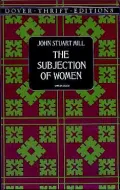
Subjection of Women by John Stuart Mill β€” book cover

Subjection of Women

by John Stuart Mill
Write a review
Log in to track your reading progress.

Overview

The renowned and influential essay by the great English philosopher argues for equality in all legal, political, social and domestic relations between men and women. Carefully reasoned and clearly expressed with great logic and consistency, the work remains today a landmark in the important struggle for human rights.

Synopsis

This landmark in the struggle for human rights, written by the great English philosopher, argues for equality in all legal, political, social and domestic relations between men and women.

About the Author, John Stuart Mill

John Stuart Mill is considered one of the greatest of 19th-century philosophers; certainly he is amongst the most durable and influential. Utilitarianism, On Liberty, and The Subjection Of Women are all considered classics and remain widely read.

"In Mill's time a woman was generally subject to the whims of her husband and/or father due to social norms which said women were both physically and mentally less able than men, and therefore needed to be 'taken care of.' Contributing to this view were social theories, i.e. survival of the fittest and biological determinism, based on a now considered incorrect understanding of the biological theory of evolution and also religious views supporting a hierarchical view of men and women within the family. The archetype of the ideal woman as mother, wife and homemaker was a powerful idea in 19th century society.

At the time of writing, Mill recognized that he was going against the common views of society and was aware that he would be forced to back up his claims persistently. Mill argued that inequality of women was a relic from the past, when might was right; but it had no place in the modern world. Mill saw this as a hindrance to human development, since effectively half the human race were unable to contribute to society outside of the home." [excerpted from Wikipedia]

Reviews

There are no reviews yet. Log in to write one.

Book Details

Published
April 1, 1997
Publisher
Dover Publications
Pages
112
Format
Paperback
ISBN
9780486296012

More by John Stuart Mill

Similar books