
Irish Americans - Fiction & Literature, Irish Fiction, Multicultural Detectives - Fiction
Log in to track your reading progress.
Overview
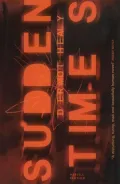
Ollie Wing is barely surviving. Back home in Sligo, he collects trolleys in a supermarket car park and lives in a run-down house with a group of art students. He can't escape what has happened in London and is tormented by old fears and regrets. Finally, he decides to confront his demons.Editorials
Times Literary Supplement
This is a novel set in the world of the everyday, told in the everyday shabby language which, through his talent, Dermot Healy turns into something original and astringent and touching and eerily pure. It's a wonderful book which asks to be compared with Joyce and Beckett in more than just an idle way.Poor old Ollie Ewing, an over-educated construction worker, wanders around in such a state of paranoid depression that even church bells portend no good for him. Yet in the hands of Irish author Healey, few characters could be more appealing. Ollie is a loveable shell of a man whose wit and surprising wisdom pop up as salvation whenever Healey's circuitous ruminations and lack of narrative cohesion threaten to irritate his reader. A quixotic, complex and hypnotic read, this is an intensely emotional novel. Healey manages to immerse the reader so completely in the protagonist's paranoia that Ollie's whacked-out take on the world eventually seems more logical and reasonable than the views offered by any of the other struggling nasties who populate Healy's dysfunctional Anglo-Irish world of half-baked relationships and menacing shadows. Toward the end of Ollie's meandering yarn, we learn how he came to such desperation. But for all its blood, guts and politics, the climactic crime-filled explanation never matches Healy's haunting and intensely moving early picture of a wise fellow done in by memory and pain.
—Chris Jones
Publishers Weekly
Already recognized as one of Ireland's best contemporary writers, Healy (Goat Song; The Bend for Home) makes good his reputation with this explosive, if somewhat truncated, third novel. In vivid, disjunctive prose, the sentences short and tumbling, Healy, who also writes plays and poetry, thrusts the reader into the life of Ollie Ewing, a young Irish man struggling to stay this side of madness after an unspecified, horrific experience in London. Once a carpenter, Ollie is making a new life for himself in Sligo, Ireland: working as a stock boy in a supermarket, settling into an apartment with a group of artists and occasionally going to visit his mother in a rural town farther north. But these seemingly easy transitions are made agonizing by Ollie' s recurrent nightmares and fragmented memories. Ollie's younger brother, Redmond, and his pal, Marty, whose grisly fates are slowly revealed, appear most often in the flood of violent images, amid glimpses of immigrant worker life in London and a seamy underworld ruled by the menacing Silver John. Healy flips back and forth from past to present and into dreams like a cardsharp shuffling a deck, revealing just enough about Ollie's trauma to make the reader avidly turn pages in search of new clues. The only problem is that he shows his hand too soon. In the second half of the novel, Healy abruptly shifts to a more straightforward account of Ollie's London past and the events that have estranged him from his father. Although this section is competently written, with good sharp dialogue, its tension and emotional resonance flag in comparison to the furious early chapters. Nonetheless, Healy's novel remains an exceptionally gripping exploration of a young man's struggle with his conscience and the mistakes of his past. (Aug.) Copyright 2000 Cahners Business Information.|Library Journal
In Healy's newest work, the na vet of a young Irish laborer leads to a devastating tragedy. A series of brief, titled vignettes introduces Ollie Ewing, who has returned home to Sligo burdened with a troubled past. Ollie relates the story of his time in London, where he moved to find work and stayed with his friend Marty, who was involved with unsavory business associates. When Marty is called away and doesn't return, a distraught Ollie searches and finds his friend's van with his barely recognizable remains inside. Ollie seeks information about the murder at pubs and job sites, finally meeting up with the gang that probably killed his friend. When his brother Redmond joins him in London, Ollie's ill-advised association with this criminal element leads to a violent denouement. Despite a slow start, this is a tense, well-written tale of the lives and language of Irishmen seeking work in a surprisingly treacherous world. Recommended for all public libraries.--Cathleen A. Towey, Port Washington P.L., NY Copyright 2000 Cahners Business Information.\Kirkus Reviews
One man's descent into the hell of madness, pursued by men who may have killed his best friend, as told by the acclaimed novelist and poet (The Bend for Home, 1998, etc.). Ollie Ewing, an Irish carpenter, is living in meager surroundings in Sligo, trying to recover from a shattering experience as an immigrant worker in London. At the outset of the story, told in the first person by Ewing, he's working in a supermarket, "a great shop to think in," and living in a rundown house inhabited by a group of struggling artists. He's been living inside his own head for so long, victimized by his London crises, the nature of which are only gradually revealed, that he is "sick of [his] own consciousness." Slowly, painstakingly, he begins to reconnect with the world, starting with his housemates, then his mother and, finally, his reproachful father, whom he visits in Coventry. Only after that reconciliation does Ollie—and Healy—reel back the months to recount the devastating events that sent him on a downward spiral. One of hundreds of itinerant Irish laborers in London, Ollie stumbles into a protection and hiring racket (vaguely reminiscent of the corrupt doings in On the Waterfront). He angers the wrong people and finds himself torn between paranoiac fantasy and genuine danger. Eventually, both his friend Marty and his brother Redmond fall victim to real violence from his real enemies, leaving Ollie to grapple alone with his demons and a brutally insensitive English justice system. Healy tells his story with a dark, jittery humor, filled with jagged rhythms, punctuated by the bizarre reveries of Ollie's wandering mind. It all ends not with Ollie's rebirth but with the traumas thatprecedeit: the result is an odd, troubling read. American readers will want a glossary of Anglo-Irish slang, but anyone who reads this will catch the brooding strangeness of this eerie, difficult book.Book Details
Published
May 31, 2011
Publisher
Random House Adult Trade Publishing Group
ISBN
9781446475430