
Nature, Animals
Available on Bookshop
Write a review
Books.org participates in affiliate programs including Bookshop.org and the Amazon Services LLC Associates Program. We may earn a commission from qualifying purchases made through links on this page, at no additional cost to you.
Log in to track your reading progress.
Synopsis
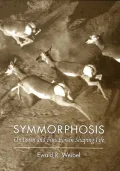
This book addresses a simple question: Are animals designed economically? The pronghorn can run at speeds of up to 60 kilometers an hour and can maintain this speed for nearly a full hour. Clearly, the form of this elegant animal is beautifully matched to the function it needs to perform.This is symmorphosis. The theory of symmorphosis predicts that the size of the parts in a system must be matched to the overall functional demand. Moreover, it predicts that animals must provide their complex systems with a functional capacity that can cope with the highest expected functional demands, possibly including some safety margin to prevent the system from failing when it is overloaded. In Symmorphosis, Ewald Weibel tests these predictions by working out the quantitative relations between form and function.
Physiologists will value this book because Weibel shows them that morphological information can be as quantitative as physiological data. Anatomists will value the book for its demonstration that advanced integrative physiology crucially depends on adequate but rigorously quantitative and testable information on structural design. Finally, anyone interested in the origins of the diverse forms of animals will be fascinated by Weibel's demonstrations that show how animals as different as shrews, pronghorns, dogs, goats--even humans--all develop from essentially the same blueprint by variation of design. This is a hidden beauty of the animal kingdom, which can be uncovered by a rigorous investigation of the quantitative relations of form and function.
Book Details
Published
March 1, 2000
Publisher
Harvard University Press
Pages
263
Format
Hardcover
ISBN
9780674000681