
Audiology & Speech Pathology, Behavioral Psychology, Methodology - Psychology, Psychotherapy, Learning & Language Disorders
Log in to track your reading progress.
Overview
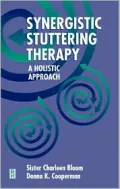
Learn the details of a synergistic stuttering treatment program that integrates the principles of speech production with the socioemotional aspects of communication. The authors guide you through the synergistic process that includes the interaction of speech-language, attitudinal, and environmental components. Discover how to structure individual treatment plans based on your client's attitudes, behaviors, and interactions within their environment. The importance of counseling and how it can be incorporated into therapy is emphasized throughout.
The book contains black-and-white illustrations.
Synopsis
Learn the details of a synergistic stuttering treatment program that integrates the principles of speech production with the socioemotional aspects of communication. The authors guide you through the synergistic process that includes the interaction of speech-language, attitudinal, and environmental components. Discover how to structure individual treatment plans based on your client's attitudes, behaviors, and interactions within their environment. The importance of counseling and how it can be incorporated into therapy is emphasized throughout.* Offers a unique approach to the evaluation and treatment of stuttering *
Reviews treatment protocols for both children and adults *
Includes a synergistic model of service delivery
Editorials
From The Critics
Reviewer: J. Scott Yaruss, PhD(University of Pittsburgh)Description: This book is a summary of the authors' approach to treating stuttering, including rationale and background for readers less familiar with fluency disorders. The treatment is appropriate, and can be supported with the authors' years of clinical experience.
Purpose: The purpose is "to present a stuttering treatment program that integrates the principles of normal speech production with the socioemotional aspects of communication." This is an appropriate goal, which the authors have achieved. The book contains a good overview of the treatment, with supporting rationale and background.
Audience: It is intended for students and practitioners in speech-language pathology. The writing and scope are appropriate for these audiences, and the book should be well-liked by students due to the clear focus and straightforward writing.
Features: The components of a "synergistic" treatment are summarized, and fluency and the speaker's reactions to stuttering are addressed. A helpful feature is the summary of how counseling relates to stuttering treatment. Multicultural aspects of treatment are also covered. This is a topic that has not been adequately covered in previous textbooks, and the detailed discussion of the importance of treating the speaker's attitudes and feelings is especially significant.
Assessment: This book is comparable in scope to other books that describe a particular author's treatment approach. It does not contain too much background information that is not directly relevant to the scope of the authors' treatment program. This makes it appropriate for a course designed to teach students this particular perspective, but it will probably be less appropriate as a general text on stuttering. This potential concern is minimized by the summary of how counseling relates to stuttering treatment. One area of concern is the lack of emphasis on the efficacy of this treatment approach; however, this is true of the majority of similar books. Overall, this book compares favorably to similar offerings.
J. Scott Yaruss
This book is a summary of the authors' approach to treating stuttering, including rationale and background for readers less familiar with fluency disorders. The treatment is appropriate, and can be supported with the authors' years of clinical experience. The purpose is ""to present a stuttering treatment program that integrates the principles of normal speech production with the socioemotional aspects of communication."" This is an appropriate goal, which the authors have achieved. The book contains a good overview of the treatment, with supporting rationale and background. It is intended for students and practitioners in speech-language pathology. The writing and scope are appropriate for these audiences, and the book should be well-liked by students due to the clear focus and straightforward writing. The components of a ""synergistic"" treatment are summarized, and fluency and the speaker's reactions to stuttering are addressed. A helpful feature is the summary of how counseling relates to stuttering treatment. Multicultural aspects of treatment are also covered. This is a topic that has not been adequately covered in previous textbooks, and the detailed discussion of the importance of treating the speaker's attitudes and feelings is especially significant. This book is comparable in scope to other books that describe a particular author's treatment approach. It does not contain too much background information that is not directly relevant to the scope of the authors' treatment program. This makes it appropriate for a course designed to teach students this particular perspective, but it will probably be less appropriate as a general text on stuttering. This potential concern isminimized by the summary of how counseling relates to stuttering treatment. One area of concern is the lack of emphasis on the efficacy of this treatment approach; however, this is true of the majority of similar books. Overall, this book compares favorably to similar offerings.Booknews
Presents a synergistic stuttering treatment program that integrates the principles of speech production with socioemotional aspects of communication. Explains a synergistic process that includes the interaction of speech-language, attitudinal, and environmental components, and shows how to structure individual treatment plans based on clients' attitudes and behaviors. Reviews treatment protocols for both children and adults, and provides a variety of functional counseling procedures. The author is with the department of communication disorders at The College of Saint Rose. Annotation c. Book News, Inc., Portland, OR (booknews.com)3 Stars from Doody
Book Details
Published
August 11, 1999
Publisher
Butterworth-Heinemann
Pages
277
Format
Paperback
ISBN
9780750695275