
Linguistics & Semiotics, Language Families, Children - Animals, Children - Fiction & Literature, Children - Poetry
Log in to track your reading progress.
Overview
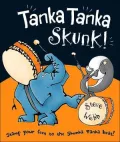
Rhyming has never been so much fun as in Steve Webb's bold, new picture book, which encourages children to read aloud, following the easy and catchy rhythm of the text."Skunka Tanka Skunka Tanka Tanka Tanka Skunk!
They've got the beat, and so do their friends."
"Meet Tanka and his friend, Skunk. When you say their names together, they sound like drums!"
Steve Webb's innovative and visually stunning picture book introduces young readers to simple rhythms with this riot of shout-out-loud words and cavorting animals. TANKA TANKA SKUNK! makes reading tons of fun as the text and the illustrations leap and dance across the pages.
Uses animal names to introduce rhythmic language and rhyme, as Tanka the elephant and his friend Skunk play drums to keep the beat.
Editorials
Publishers Weekly
This first picture book from a British graphic designer exudes a veteran's assurance and easygoing enthusiasm. Tanka and Skunk are avid bass drummers; they are also, respectively, an elephant and a skunk. Together, these cartooned percussionists lead readers through a time-beating exercise that acts as an introduction to the rhythm of words. They begin with their own names: "Skunka Tanka/ Skunka Tanka/ Tanka Tanka Skunk!" Background stripes of contrasting colors provide cues to breaking up the beat into measures, and the rough-and-ready typeface grows in size to encourage a hearty pumping up of the volume. The text moves from a simple meter to groovy, tongue-tickling examples of zoological word jazz: "panda/ panther/ tiger/ zebra/ alligator/ fox/ tiny little hairy spider/ armadillo/ ox." The infectious cadences and comic animal portraits make beautiful music together to the very last page (when the narrator declares, "Once more from the top.../ faster this time, please!"). A surefire method for turning young readers into confirmed beatniks. Ages 4-8. (June) Copyright 2004 Reed Business Information.Children's Literature
Grab your rhythm sticks, drums, tambourines, and blocks—you are going to want to make some noise with this book! Designed to help children feel a sense of beat in words, this story both explains and illustrates the rhythmic differences in animal names. It begins by introducing the repetitive chant of the book, "Skunka Tanka, Skunka Tanka, Tanka , Tanka, Skunk!" From there, an enthusiastic skunk and elephant march (drums in hand) to their many exotic friends for rhythmic analysis. Words like caterpillar, kangaroo, cheetah, and yak are considered. Although the skunk and elephant do not demand the reader to stomp or clap along during these introductions, one cannot help doing so. Readers will want to move with this book and chant it over and over again. It is a perfect accompaniment to any music classroom as well as any young person's bookshelf. The words are in bold print and the illustrations are broad and colorful. The beat in this book is loud and clear! 2003, Orchard Books, Ages 2 to 6.—Andrea Sears Andrews
School Library Journal
PreS-Gr 1-Simply by using the syllables in animal names, Webb creates an enjoyable and musical picture book. Tanka the elephant and his friend Skunk beat out a cadence on their drums, "Skunka Tanka/Skunka Tanka/Tanka/Tanka/Skunk." This verse serves as a refrain as they meet other creatures and say their names: "And this is caterpillar./His name has four beats./Cat-er-pil-lar"). Although the story is without a plot, its celebration of sound brings to mind the off-Broadway show STOMP, which capitalizes on unconventional ways that music and rhythm resonate in our lives. Brightly colored background squares show off the heavy black outlines of the cartoon animals. Various sizes and shapes of font draw emphasis to the accents and patterns of the words. Storytime audiences will revel in the beat when this book is used as a filler between longer plot-driven stories or as a culminating activity after marching around the room as a band.-Blair Christolon, Prince William Public Library System, Manassas, VA Copyright 2004 Reed Business Information.Kirkus Reviews
Tanka the elephant and Skunka the skunk are the stars of this humorous animal-identification story that uses rhythm and rhyme to establish the concept of rhythmic beats. For example, Skunka introduces a kangaroo by saying, "His name has three beats." Each syllable is then shown spread across a set of drums, illustrating the concept of beats. A repeating refrain using the two main characters beating on drums is interspersed with rhyming sequences of animal names with cartoon-style illustrations of each character. There isn't much of a storyline, but the text has the advantages of rhyme, rhythm, and repetition, and children will enjoy chanting along through repeated readings. This is a title that kindergarten and first-grade teachers will find useful for reinforcing the concept of syllables, as a story for shared reading sessions, or as independent reading for new readers. The amusing animal expressions, bright palette in summery shades, and hand-lettered text in bold black letters add to the overall appeal. (Picture book. 3-7)Book Details
Published
June 1, 2004
Publisher
New York : Orchard Books, 2004.
Pages
32
Format
Hardcover
ISBN
9780439578448