
Terrorism - General & Miscellaneous, Civil Rights - General, Torture & Persecution, Censorship
Log in to track your reading progress.
Overview
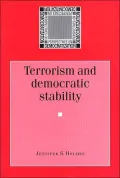
This detailed empirical study examines the effect of terrorism and state repression on democratic stability in Uruguay, Peru, and Spain. In 1973 the Uruguay military closed the national assembly and instituted 10 years of authoritarian rule. In spite of 70 years of democracy, however, Uruguayans did not protest against the downfall of democracy. In 1992 Alberto Fujimori dissolved the Peruvian congress and judiciary; 80 percent of Peruvians approved of his self-coup. In Spain, the troubled democracy survived an attempted coup in 1981. Large demonstrations broke out in major cities in favor of democracy, as three out of four Spaniards rejected the coup and almost half said they would act to defend democracy. Why did Uruguayans and Peruvians withhold support for their democracies? Why did the Spaniards defend theirs? This study provides a new approach to citizen support to examine the consequences of terrorism and repression on democratic stability.Book Details
Published
June 28, 2001
Publisher
Manchester University Press
Pages
256
Format
Hardcover
ISBN
9780719059599