
United States - World War II - Homefront, 20th Century American History - 1900-1945, United States - World War II Armed Forces, 20th Century American History - World War II, 20th Century American History - Social Aspects - General & Miscellaneous
Available on Bookshop
Write a review
Books.org participates in affiliate programs including Bookshop.org and the Amazon Services LLC Associates Program. We may earn a commission from qualifying purchases made through links on this page, at no additional cost to you.
Log in to track your reading progress.
Overview
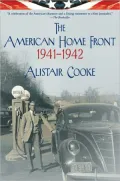
In nearly three thousand BBC broadcasts over fifty-eight years, Alistair Cooke reported on America, illuminating our country for a global audience. He was one of the most widely read and widely heard chroniclers of America—the Twentieth Century’s de Tocqueville. Cooke died in 2004, but shortly before he passed away a long-forgotten manuscript resurfaced in a closet in his New York apartment. It was a travelogue of America during the early days of World War II that had sat there for sixty years. Published to stellar reviews in 2006, though “somewhat past deadline,” Cooke’s The American Home Front is a “valentine to his adopted country by someone who loved it as well as anyone and knew it better than most” (The Plain Dealer [Cleveland]). It is a unique artifact and a historical gem, “an unexpected and welcome discover in a time capsule.” (Washington Post) A portrait frozen in time, the book offers a charming look at the war through small towns, big cities, and the American landscape as they once were. The American Home Front is also a brilliant piece of reportage, a historical gem that “affirms Cooke’s enduring place as a great twentieth-century reporter” (American Heritage).Editorials
William Grimes
Crisscrossing the American continent from east to west and north to south, stopping in diners and bus stations and newly humming industrial plants, Mr. Cooke brings to life an America stepping into the unknown, committing its muscle and blood to an enterprise that most citizens could barely articulate, in places most of them had never heard of. On Dec. 7, 1941, Mr. Cooke writes, "a lot of people were left sitting in their homes not 'stunned' as the newspapers have it but fuzzily wondering where Pearl Harbor was."— The New York Times
Library Journal
In this blend of history and social commentary, British American journalist Cooke (1908-2004) sets out on a cross-country trip complicated by wartime restrictions on tires and gasoline to obtain a true portrait of an America in transition from the Great Depression to World War II. As a reporter, Cooke wanted to escape the official propaganda coming out of New York and Washington, DC. On his journey, he encountered lonely soldiers looking for fun on a Saturday night in Louisville, KY; thousands of workers migrating to a new munitions factory in Indiana; and interned Japanese Americans housed in primitive camps. This book is more than a pointillist snapshot of a vanished America replete with folksy anecdotes. Cooke did not sentimentalize what he encountered but, instead, offered an outsider's keen perception. His account of the industrial uses of the common orange is intriguing. His deft use of language can be seen through metaphor. The author's son, John Byrne, does an excellent job; his cadences are well measured, and he adjusts his voice slightly to convey the ethnicity of the various interviewees, whom his father quotes exactly. As this is an evocative time capsule and travelog, it's recommended for public libraries wishing to supplement their World War II collections. David Faucheux, Louisiana Audio Information & Reading Svc., Lafayette Copyright 2006 Reed Business Information.Kirkus Reviews
Revealing portrait of America in the early years of WWII. Those who remember English-born Cooke as the avuncular and courtly host of Masterpiece Theatre may be surprised to learn that he was ever young-and that, as a young journalist, he had few illusions about his adoptive land. Reporting for the BBC's Home and Empire Services, Cooke took off from New York long after Pearl Harbor to see what this giant ally would mean to Britain, and he opens apologetically, since Britain had been fighting alone for two years. Asking his listeners to hear tales of "American sacrifice," he admits, "must have seemed as if we were asking you to take out your handkerchief and weep for a very rich man who had mislaid a favorite diamond ring." He is duly incensed when he heads west and discovers wealthy playboys playing golf and sunning themselves poolside in places like Tucson and Los Angeles; he is scornful when he meets gringos who deride their Mexican neighbors for being dirty and disease-ridden; he is astonished by the "fact that most regions of the country, passionately knowledgeable about their own characteristics, and patient in helping the stranger refine his knowledge of them, yet show the blandest ignorance of what goes on thirty or 100 miles away." Yet Cooke is also mindful of sacrifices made, among them the disruptions suffered by the commandeering of civilian transport to the federal rationing program, which forced one West Texas rancher to get back on a horse after years of riding the range in a truck ("Of course," says another, "the cows don't know the war's on"). Americans being Americans, he notes in a 1945 postscript, that rationing begat a huge "black market in meat [that] was so nowexpertly organized that its profits far outshone the amateur take of the liquor lords of the 20s."A vivid, endlessly interesting view of the home front.Book Details
Published
December 1, 2007
Publisher
Grove/Atlantic, Inc.
Pages
352
ISBN
9781555848149