
Motherhood, Art - General & Miscellaneous, Material Culture, Sociology - General & Miscellaneous, Anthropology - General & Miscellaneous, Physical Anthropology, Evolution
Log in to track your reading progress.
Overview
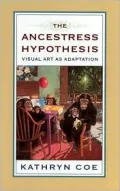
In our society it has long been believed that art serves very little social purpose. Evolutionary anthropologists, however, are examining a potential role for art in human evolution. Kathryn Coe looks to the visual arts of traditional societies for clues. Because they are passed down from previous generations, traditional art forms such as body decoration, funeral ornaments, and ancestral paintings offer ways to promote social relationships among kin and codescendants of a common ancestor. Mothers used art forms to anchor themselves and their kin to the father and his kin, and to promote the survival and reproductive success of kin and descendants. Individuals who abided by this strategy, accompanied by its strict codes of cooperation, left more distant descendants than did individuals who did not. Over time, given this reproductive success, large numbers of individuals would be identified as codescendants of a common ancestor and would cooperate as if they were close kin. These cooperative codescendants were more likely to survive and leave descendants. With each new generation these clans propagated not only their genes but also their behavioral strategy, the replication or presence of "art." The book concludes by examining the changing characteristics of visual art -- including a higher value on creativity, competition, and cost -- when traditional constraints on social behavior disappear.Editorials
Library Journal
Coe (anthropology, Univ. of Missouri, Columbia) here examines the role that art may play in human evolution, paying close attention to the visual arts, which she defines as line, color, pattern, and/or form used by humans to modify an object or body to attract attention to it. Thoroughly discussed are worldwide customs related to women (such as proper mate selection to ensure the gene pool) and how people in clans and tribes continue social aspects derived from ancestral women who trained their children and grandchildren in copying techniques or "arts." Coe has in included ample citations to the 31 pages of references, proving that she knows her field well. Suggested for the social anthropology and gender studies sections of academic libraries.-Anne Marie Lane, Univ. of Wyoming, Laramie Copyright 2003 Reed Business Information.Book Details
Published
April 30, 2003
Publisher
New Brunswick, NJ ; Rutgers University Press, c2003.
Pages
232
Format
Hardcover
ISBN
9780813531311