
Literary Figures - Women's Biography, Family Memoirs & Histories, Women Authors - American (U.S.) - Literary Criticism, U.S. Authors - 19th Century - Literary Biography, American Women - Literary Biography, 19th Century American History - Social Aspects,
Available on Bookshop
Write a review
Books.org participates in affiliate programs including Bookshop.org and the Amazon Services LLC Associates Program. We may earn a commission from qualifying purchases made through links on this page, at no additional cost to you.
Log in to track your reading progress.
Overview
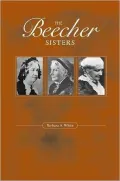
The Beecher sisters-Catharine, Harriet, and Isabella-were three of the most prominent women in nineteenth-century America. Daughters of the famous evangelist Lyman Beecher, they could not follow their father and seven brothers into the ministry. Nonetheless, they carved out pathbreaking careers for themselves. Catharine Beecher founded the Hartford Female Seminary and devoted her life to improving women's education. Harriet Beecher Stowe became world famous as the author of Uncle Tom's Cabin. Isabella Beecher Hooker was an outspoken advocate for women's rights. This engrossing book is a joint biography of the sisters, whose lives spanned the full course of the nineteenth century. The life of Isabella Beecher-who has never been the subject of a biography-is examined in particular detail here. Drawing on little used sources, Barbara White explores Isabella's political development and her interactions with her sisters and with prominent people of the time-from Susan B. Anthony and Elizabeth Cady Stanton to Mark Twain."This monumental book significantly expands our knowledge and understanding of the social history of women, and it does so in an engaging manner that will appeal to both the scholar and the general reader."-Josephine Donovan, author of Uncle Tom's Cabin: Evil, Affliction and Redemptive LoveAuthor Biography: Barbara A. White is professor emeritus of women's studies at the University of New Hampshire.
Editorials
Publishers Weekly
At a time when few women entered the public sphere, the Beecher sisters made an impressive splash. Harriet Beecher Stowe became world famous after publishing her antislavery novel, Uncle Tom's Cabin, in 1852: 300,000 copies were sold in the United States that year, and she became the unofficial "spokesperson of the anti-slavery movement." The oldest sister, Catharine Beecher, founded the Hartford Female Seminary in the 1820s and published over two dozen books on women's education and religion. Isabella, the youngest sister, has been less celebrated, and White chooses to focus this joint biography on her in part because no full-length biography of her exists, in part because a great deal of primary material on her life is available. The decision to focus on Isabella is a good one. She becomes a leader in the women's movement, intimately associated with Susan B. Anthony and Elizabeth Cady Stanton, but she is just controversial and flighty enough to ruffle feathers and show the frayed edges of central alliances within the movement. The same holds true for her relationship with her sisters-the three women represent very different perspectives on how women ought to participate in the public sphere, and it's usually Isabella's liberal leanings that create rifts within the family. White, professor emeritus of women's studies at the University of New Hampshire, brings to life the details and the ethos of an era; this volume provides not only a rich, varied, sensitive account of the sisters' lives, but a compelling overview of the many groundbreaking acts performed by intelligent, steadfast women during the 19th century. B&w photos. (Nov.) Copyright 2003 Reed Business Information.Library Journal
The seven sons of famous American evangelist Lyman Beecher followed him into the ministry, but what of his four daughters? White (Univ. of New Hampshire; Growing Up Female) examines the lives of three of those daughters. Readers will recognize Harriet as the author of Uncle Tom's Cabin but may be surprised to learn of Catherine's career as a pioneer of women's education and Isabella's as a women's rights' advocate. Painstaking research, much of it from primary sources, traces these lives from childhood in the intellectually stimulating and emotionally volatile Beecher household through careers, marriage, and motherhood to fame and legacies. Along the way, we learn that Catherine considered teaching "drudgery," that Harriet constantly struggled to balance writing and family, and that pragmatic suffragette Isabella was obsessed with Spiritualism. Throughout, White emphasizes their loving but complicated relationships with each other. Though scholarly in tone and most suitable for academic libraries, this is no dry recitation of facts. Instead, it is a vivid portrait of three complex women who succeeded in a world dominated by men. Although biographies have been published of Catherine and Harriet, none exists of Isabella; and while Samuel Schreiner's recent The Passionate Beechers provides similar coverage, it focuses on the family as a whole rather than on the sisters. White is to be commended for restoring Catherine and Isabella to their rightful places beside their more famous sister.-M.C. Duhig, Carnegie Lib. of Pittsburgh Copyright 2003 Reed Business Information.Book Details
Published
November 1, 2003
Publisher
Yale University Press
ISBN
9780300127638