
Americans - Regional Biography, American & Canadian Literature, US & Canadian Literary Biography, General & Miscellaneous Literary Criticism, Gay & Lesbian Studies, Gay & Lesbian Biographies
Log in to track your reading progress.
Overview
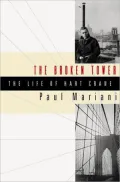
Few poets have lived as extraordinary and fascinating a life as Hart Crane, the American poet who made his meteoric rise in the late 1920s and then as suddenly flamed out, killing himself at the age of thirty-two and thus turning his life and poetry into the stuff of myth.
Editorials
Langdon Hammer
...[T]he first biography of Crane to appear in 30 years....[Mariani's] aim isn't to moralize Crane's life but to retell it as "a great Greek tragedy" in Jazz Age dress....Mariani seems to have written it not in the library but in his study, with Crane's books and the main books about him open on the desk....[H]e tries...to be the comrade or "accomplice" [Crane's] poems seek. The results, for all their staginess, are helpful readings of famously difficult texts.—New York Times Book Review
Library Journal
Mariani, a professor at the University of Massachusetts and a poet himself (The Great Wheel, LJ 3/15/96), has authored biographies of Robert Lowell and John Berryman and was nominated for the National Book Award for his work on William Carlos Williams. No stranger to contemporary American poetry and its antecedents, Mariani now turns to the mythic Hart Crane. Using unpublished letters, manuscripts, and photographs, he pieces together the life and passions of this brilliant yet tormented man whose creative genius left us The Bridge and whose influence still reverberates among poets today. In a work that is readable yet scholarly, Mariani, unlike earlier Crane biographers Philip Horton and John Eugene Unterecker, does not dance around Cranes homosexuality and alcoholism but instead places his self-destructive lifestyle in the context of his writing and balances it against his self-schooled and highly principled concept of poetry and its place in the quotidian. For larger public and academic libraries.Denise S. Sticha, Seton Hill Coll. Lib., Greensburg, PALangdon Hammer
...[T]he first biography of Crane to appear in 30 years....[Mariani's] aim isn't to moralize Crane's life but to retell it as ''a great Greek tragedy'' in Jazz Age dress....Mariani seems to have written it not in the library but in his study, with Crane's books and the main books about him open on the desk....[H]e tries...to be the comrade or ''accomplice'' [Crane's] poems seek. The results, for all their staginess, are helpful readings of famously difficult texts.— The New York Times Book Review
Kirkus Reviews
A superbly wrought, movingly told biography of the great American poète maudit, author of the epic The Bridge. While much of the Modernist mainstream, from Eliot's The Wasteland to Joyce's Ulysses, was suffused by a dark Spenglerian vision of civilization's future, Hart Crane, almost alone, was sustained by more optimistic, transcendent possibilities. Sometimes called the "last Romantic," not least for the characteristic high poetic, even Elizabethan tenor of his verse, Crane believed that his "visionary possibilities might, just might, reverse that [America's] downward spiral and in the process revitalize the entire country." Well-versed biographer and poet Mariani (Lost Puritan: A Life of Robert Lowell, 1994, etc.) has a keen, sympathetic understanding of Crane's tormented character and the predicament of poets in a prosaic age. He also does a remarkable job of explicating Crane's notoriously difficult work and teasing out the substantial autobiographical underpinnings. However, Mariani occasionally lets his prose get carried a little too high on the viewless wings of poesy: for example, "Summer swept down over the city like a succubus." Carefully drawing on a variety of recently-come-to-light resources, he traces Crane's tragic trajectory, from golden boy to working drudge, stealing a few tired hours to write or carouse with his beloved sailors, to his increasing bouts with alcohol, his frequent poverty and instability, and his suicide at the age of 32. It is a compelling story, and Mariani tells it with the kind of insight and psychological acuity worthy of a great Russian novelist.Book Details
Published
April 5, 2000
Publisher
New York : W.W. Norton, c1999.
Pages
492
Format
Hardcover
ISBN
9780393047264