
United States History, Military History, Children - Reference & Study Aids
Available on Bookshop
Write a review
Books.org participates in affiliate programs including Bookshop.org and the Amazon Services LLC Associates Program. We may earn a commission from qualifying purchases made through links on this page, at no additional cost to you.
Log in to track your reading progress.
Overview
The war began on April 12, 1861, and ended almost exactly four years later on April 9, 1865.
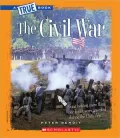
The true stories of the battles that decided the fate of a nation;
Maps, a timeline, photos-and how leaders such as Abraham Lincoln influenced the outcome of the war;
Surprising TRUE facts that will shock and amaze you!
Editorials
Children's Literature -
This book was reviewed with three additional books in the "A True Book" series (see also Slavery in America, Abraham Lincoln, The Confederate States of America). All the books reviewed from this series utilized the identical format, with a "factoid" highlighted on the cover and then a page highlighting two "True or False" questions whose answers can be found in the text. A Table of Contents guides readers to five to seven short chapters with one chapter in each volume entitled "The Big Truth," although it is not clear why that chapter stands out from the others. Text is followed by "True Statistics," "Resources" (websites, places and books), "Important Words" (glossary), a solid Index, and a brief author biography. All books are amply illustrated with photographs (both black and white and color), occasional maps, and reproductions of drawings and artwork. Several of these are duplicated across the four books reviewed. A very minimal "Timeline..." illustrates four events in each volume. Here we are given the dates that South Carolina seceded, Fort Sumter was attacked, the battle at Gettysburg was fought, and Lee surrendered to Grant. Although other significant events may be described in the text, a more comprehensive chronology would have been valuable. There are no sources cited for facts/ assertions, which is of concern mainly because they sometimes vary from book to book and/or are unclear. For example, given the strong political control of the South over Congress and the Supreme Court (p. 8), it is never explained how Congress was able to enact tariffs that were seen as inimical to southern economic interests (p. 9). The chapters in this book describe growing tensions between northern and southern states which eventually led to the secession of eleven states from the Union, several decisive battles and military strategies during the war, additional factors which led to defeat of the South, the fate of the two presidents, Lincoln and Davis, and the legislation enacted in the aftermath of the war. Overall these books are adequate for a classroom or school library needing materials on the subject.Book Details
Published
September 1, 2011
Publisher
Scholastic Library Publishing
Pages
48
Format
Paperback
ISBN
9780531266229