
Poetry, General
Available on Bookshop
Write a review
Books.org participates in affiliate programs including Bookshop.org and the Amazon Services LLC Associates Program. We may earn a commission from qualifying purchases made through links on this page, at no additional cost to you.
Log in to track your reading progress.
Synopsis
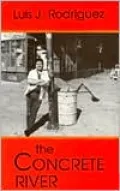
1991 PEN Oakland/Josephine Miles Award for Literary ExcellenceThe Concrete River is a collection of poems by poet laureate of Los Angeles Luis Rodríguez. They illuminate the gritty idiosyncrasies of immigrant life in urban barrios spanning Los Angeles to Chicago to Harlem. Rodríguez lends powerful voices to those struggling to keep the gas on, to find work, and to keep love. Populated by a vibrant cast of characters, ranging from the drugged, to the eccentric, to the heartbroken, Rodríguez’s poems protest capitalism, violence, and exploitation while reveling in the potential of compassion.
Editorials
Publishers Weekly -
Rodriguez ( Poems Across the Pavement ) writes eloquently of ``a severed America,'' of Mexicans exiled to ``the armed camp called East Los Angeles,'' of laid-off laborers and evicted families--in short, of a populace locked out of privilege and prosperity. Turned away, they turn fury pk and desire inward--and implode. In the title poem, homeboys gather on the cement banks of the L.A. River to inhale aerosol fumes. Their ensuing visions transform ``an urban-spawned / Stream of muck'' into ``a flow of clear liquid / On a cloudless day''--yet end in near suffocation. However, Rodriguez's men and women are more often the victims of the anger of others--especially the police. A moving elegy, ``The Best of Us'' tells how a few words exchanged by a young Mexican and the police end in the man's murder. But while violence is always on the verge of eruption, beauty also blossoms in unusual places. As a couple dances in a dive, the poet notes ``how a hand opens slightly, / shaped like a seashell, / in the small / of a back.'' This poetry is of the barrio yet stubbornly refuses to be confined in it--Rodriguez's perceptive gaze and storyteller's gift transport his world across neighborhood boundaries. (June)Library Journal
These poems are contemporary reports from the underside of American culture. They consider the homeless, the unemployed, the exploited working class, the dispossessed of the American Dream who occupy the tenements within ``the miasmic draft of side-street America.'' As a former steelworker, carpenter, truck driver, and refinery worker, Rodriguez writes from the inside out, with great knowledge, passion, and compassion. His journalist background allows him to report the stories that often fail to make the front pages of the daily news. The poems and stories in this collection orbit the Chicano experience of Watts and East L.A., where ``the song of our wails,/ the wails of our song,/ thundering against the sides of this city of angels/so far removed from heaven.'' Rodriguez shows us how anger can also be an expression of love. Highly recommended for contemporary poetry and multicultural collections.-- Thom Tammaro, Moorhead State Univ., Minn.Book Details
Published
July 1, 1995
Publisher
Northwestern University Press
Pages
125
Format
Paperback
ISBN
9780915306428